
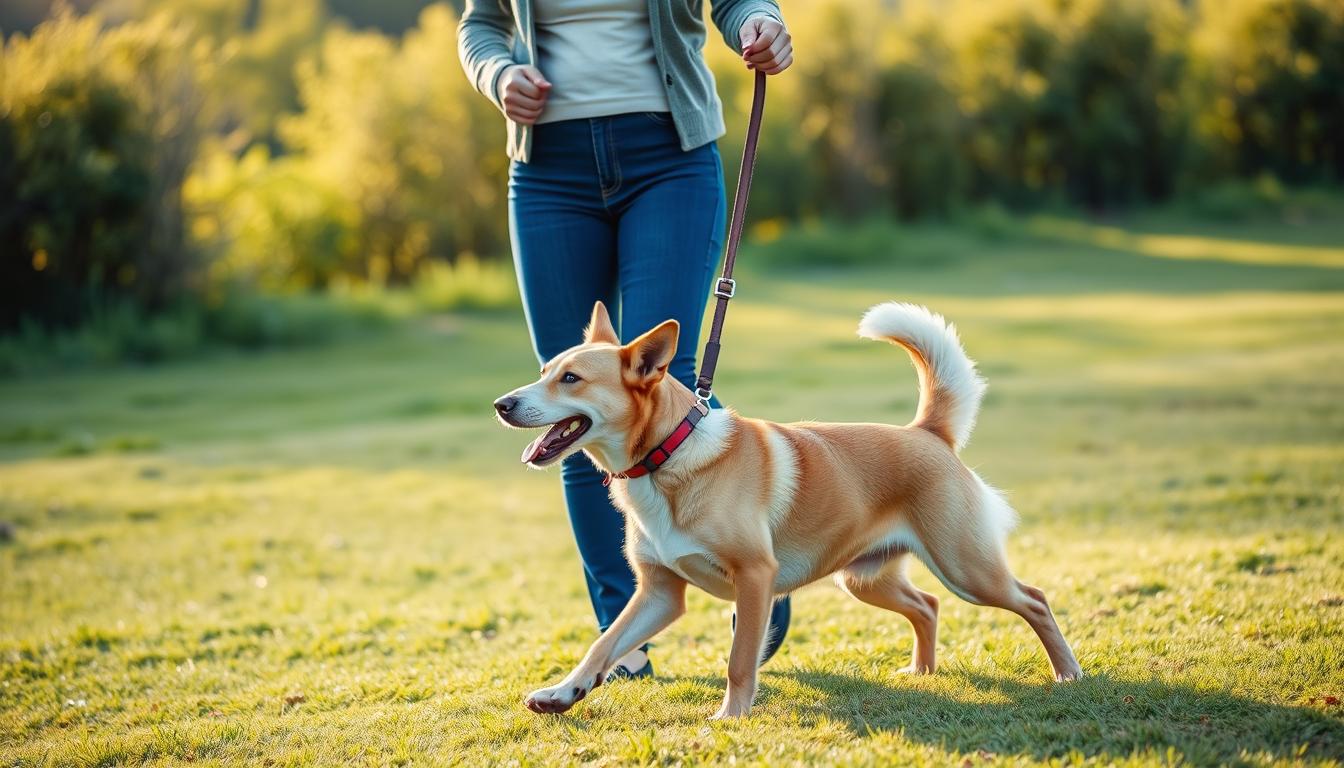
Imagine walking through a beautiful park on a sunny day. Your dog is by your side, moving in perfect sync. This is a dream for many dog owners. But, it’s easier than you think with the right training.
Teaching your dog to heel is more than just a pretty picture. It’s about building a strong bond and understanding between you and your dog.
Whether you’re new to dog ownership or have experience, training can seem tough. But, with dedication and the right methods, you can do it. Get ready for a fun journey to make walks enjoyable for both of you.
Quick Recommendation: Our blog is filled with tips and tricks for training your puppy or dog. If you’re seeking a comprehensive training program, we recommend K9 Training Institute.
Why Teaching Your Dog to Heel is Important
Teaching your dog to heel makes walks safer. It lets you control your dog better, keeping them out of harm’s way. Heeling also helps your dog release energy in a safe way.
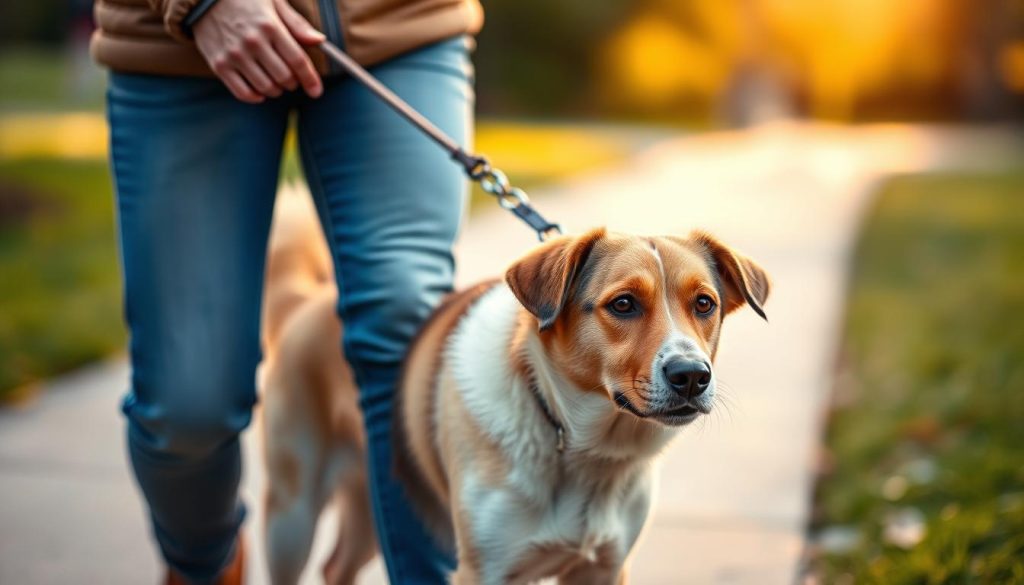
Knowing how to walk your dog is key for a good time on walks. A dog that heels well makes walks enjoyable for everyone. It shows good manners and helps avoid bad behavior.
Teaching your dog to heel also strengthens your bond. Working together on commands builds respect and trust. This makes every walk and moment with your dog better.
Preparing for Heel Training
Before starting heel training, make sure you have the right setting. Pick a quiet spot with no distractions. This lets your dog focus on you.
It’s important your dog is calm. Don’t train when they’re too excited or tired. They should be alert but relaxed.
Next, get all the things you need for training. Use treats or toys to reward your dog. Keep these rewards handy but out of sight to avoid distractions.
How you feel affects your dog’s training. Be patient, consistent, and positive. Training might take time, but keep going. Your dog will learn to enjoy heeling with time.
In short, a good start in heel training is key. The right setup and a patient approach will help you and your dog succeed. Focus on creating a positive learning environment.
Choosing the Right Collar and Leash
Choosing the right dog collars and leashes is key for heel training. There are many options to fit different needs.
Standard collars are a good choice for many. They come in many styles and materials. But, if your dog pulls a lot, you might need something else.
Head halters offer more control, especially for big dogs. Make sure they fit well to keep your dog comfy.
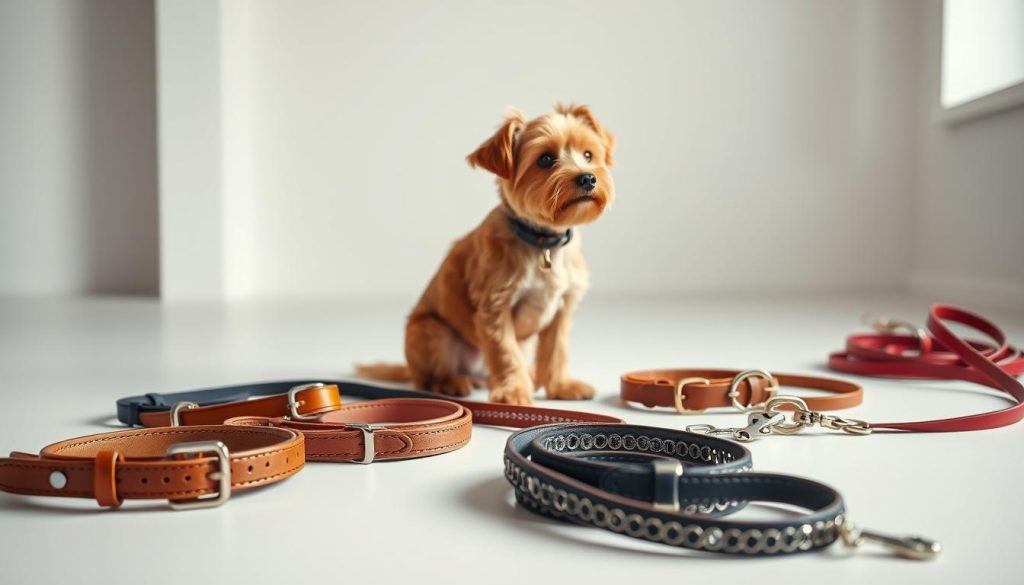
Training harnesses spread out the pressure, avoiding neck strain. They’re great for long training times.
Finding the right gear means safety and comfort for your dog. Spending time on choosing the right collars and leashes makes training better.
Basic Heel Command Techniques
Starting heel training with your dog is rewarding and builds a strong bond. It also ensures safety during walks. Begin by getting your dog used to the “heel” command in a quiet place.
Stand on your dog’s left side, as this is the standard position. Use treats or praise to make training fun and rewarding. Hold the leash in your right hand and give treats with your left, guiding your dog’s head.
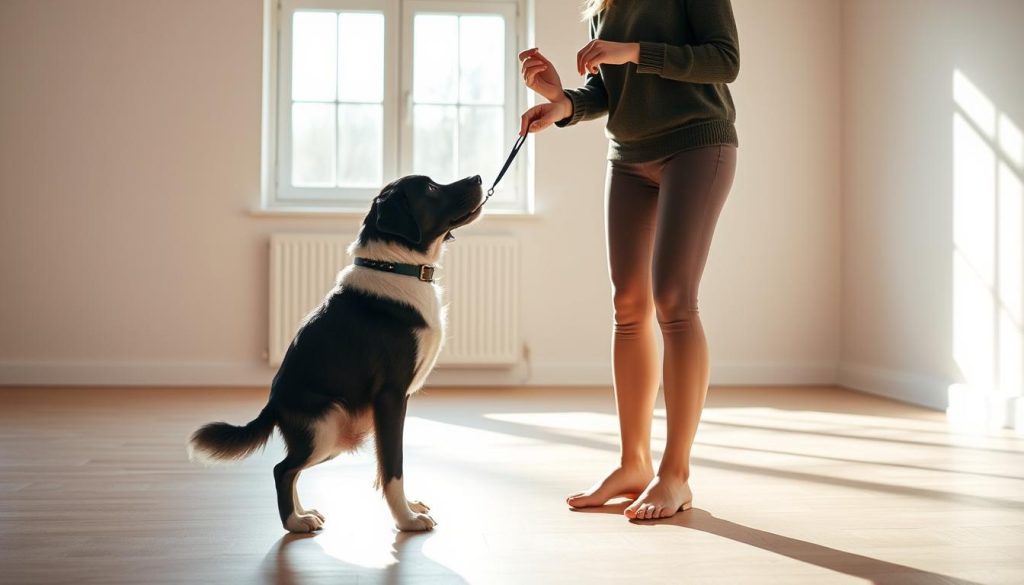
Good leash handling is key in heel training. Keep the leash short but not tight. This lets you control your dog without hurting them. Move with a loose leash, ready to correct if your dog pulls.
Be consistent with the “heel” command. Reward your dog for staying by your side. Short, regular training sessions work better than long, irregular ones. Patience and persistence will make training successful and fun for both of you.
Quick Recommendation: Our blog is filled with tips and tricks for training your puppy or dog. If you’re seeking a comprehensive training program, we recommend K9 Training Institute.
Advanced Techniques to Improve Heeling
To improve your dog’s heel command, start with advanced techniques. Add distractions to keep your dog focused. This is key for distraction-proofing heeling in busy places.
Try turns and changes in pace to challenge your dog. Complex heel exercises like figure-of-eight patterns or sudden stops help. They keep your dog attentive and responsive.
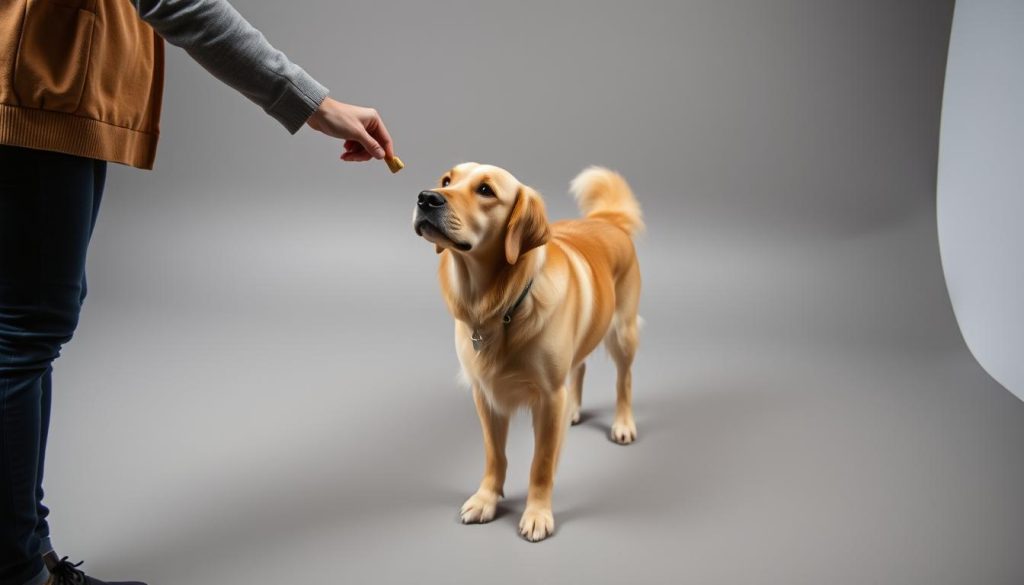
Finally, train in different places. This makes your dog comfortable and skilled in mastering heel work anywhere. Parks, urban areas, and pet-friendly stores are great for practice.
The Right Way to Teach Your Dog to Heel
Teaching your dog to heel needs patience and lots of positivity. Start with short sessions, like five to ten minutes. This keeps your dog focused and helps them learn better.
Stay calm while training. Speak clearly and use a firm but gentle voice. Give treats and praise when they do it right. This makes them want to heel more.
Practice regularly in different places. This helps your dog learn to heel everywhere, not just at home. Start with easy spots and then move to busier areas.
Watch your dog’s body language. If they seem confused, change your approach. Sometimes, just walking a bit slower can help them keep up.
Always end training on a high note. Finish when your dog is still interested. This makes both of you look forward to the next session.
Common Mistakes to Avoid
When training your dog to heel, many owners make mistakes. One big error is using different commands. Always use the same words for commands to avoid confusing your dog.
Another mistake is rewarding your dog too late. This makes it hard for them to connect the reward with the right behavior. Give treats right away when your dog heels correctly. This helps them learn and avoids mistakes.
Not considering your dog’s learning speed is also a problem. Expecting them to learn too fast can frustrate both you and your dog. Every dog learns at their own pace. Be patient and adjust your training to match their learning.
Dealing with Distractions
Learning to heel well can be tough, especially with distractions. Start by slowly introducing your dog to different things that might distract them. Begin in a place with few distractions and then add more as you go.
Make sure your dog can still listen to you. If they start to get distracted, use positive rewards to get their attention back. This way, they learn that ignoring distractions means getting treats.
Getting better at ignoring distractions takes time and effort. Stay calm and patient, as your dog will pick up on your mood. With consistent practice, your dog will get better at ignoring distractions and staying focused.
Tracking Progress and Adjusting Techniques
It’s important to keep track of how well your dog is doing in heel training. Start by keeping a journal to note any improvements. Look for signs like your dog being more responsive to the command and pulling less during walks.
If you notice no progress, it’s time to change your training methods. Think about whether the techniques you’re using are working. Positive reinforcement and clear commands usually work best. Also, keep training sessions short and fun to avoid boredom or frustration.
Getting feedback from your dog is key to improving. Pay attention to any signs of stress or confusion. This helps make sure your training is effective and enjoyable for both of you.
Using Games to Reinforce Heeling
Adding heeling games to your training can make it more fun for you and your dog. Games like “follow the leader” turn a simple exercise into a fun activity. Start in a quiet place, guiding your dog as you move and change direction.
Give them treats and praise to keep them interested. This makes the training enjoyable and helps them learn.
Try setting up an obstacle course for another game. Use things around the house or go to a park with natural obstacles. This game helps your dog stay close to you while you go through the course.
It’s great for improving their focus and how quickly they respond. Remember, these games are meant to be fun and engaging.
Watch how your dog does and change the game if needed. With regular practice, you’ll see big improvements in their heeling skills.
How Long Will it Take for My Dog to Learn to Heel?
Several factors affect how long it takes for your dog to learn to heel. The breed of your dog is a big factor. Some breeds, like Border Collies or German Shepherds, learn faster.
The age of your dog also matters. Puppies learn quickly because they are curious. But older dogs can learn too, with patience.
How much training your dog has had before is important. Dogs that have learned before might pick up heeling commands quicker. But if your dog is new to training, it will take more time.
Every dog learns at their own pace. Some dogs are eager to please, while others need more encouragement. Tailoring your training to your dog’s personality helps a lot.
Setting realistic goals is key to avoid getting frustrated. Celebrate small victories and keep training sessions consistent. Remember, the time it takes to train your dog to heel depends on your effort and dedication.
Conclusion
As you near the end of your dog’s heel training, take time to think about how far you’ve come. You’ve worked hard to practice each command and fix any errors. This has made your bond with your dog stronger.
It’s important to celebrate your training wins. This not only boosts good behavior but also keeps you excited to keep training.
Keep pushing your dog with new commands and situations. Make sure training stays fun and useful. Being consistent helps keep your dog’s skills sharp.
Use games and track progress to help your dog learn better. This ongoing effort is crucial. It keeps your dog well-behaved and ready for anything.
The journey with your dog is just beginning. Learning together will make your bond stronger. Trust and cooperation will grow as you keep training.
So, keep up the good work. Enjoy the rewards of your hard effort in training your dog.
Quick Recommendation: Our blog is filled with tips and tricks for training your puppy or dog. If you’re seeking a comprehensive training program, we recommend K9 Training Institute.