

Did you know over 80% of dog owners struggle with leash pulling? If you’re facing this issue, you’re in good company. Imagine turning those stressful walks into peaceful moments where you and your dog can bond and enjoy the outdoors. This article will share training techniques to help you achieve calm, enjoyable walks.
Quick Recommendation: Our blog is filled with tips and tricks for training your puppy or dog. If you’re seeking a comprehensive training program, we recommend K9 Training Institute.
Understanding the Basics of Leash Training
Before we dive into leash training, it’s key to know why it’s important. Proper leash training keeps you and your dog safe. It makes walks better and shows you’re a responsible dog owner. It also means your dog walks calmly by your side, making walks fun.

Positive reinforcement is a big part of leash training. This method rewards your dog for good behavior. When your dog walks nicely, give them praise and treats to encourage more of it.
It’s also important to understand why dogs pull on leashes. They often pull because they’re excited to see new things. With the right training, you can teach your dog to walk calmly.
Leash training is about more than just walking. It’s about building a strong bond with your dog. It teaches them to trust and follow you. By learning these basics, you create a happy and harmonious life with your dog.
Choosing the Right Leash and Collar
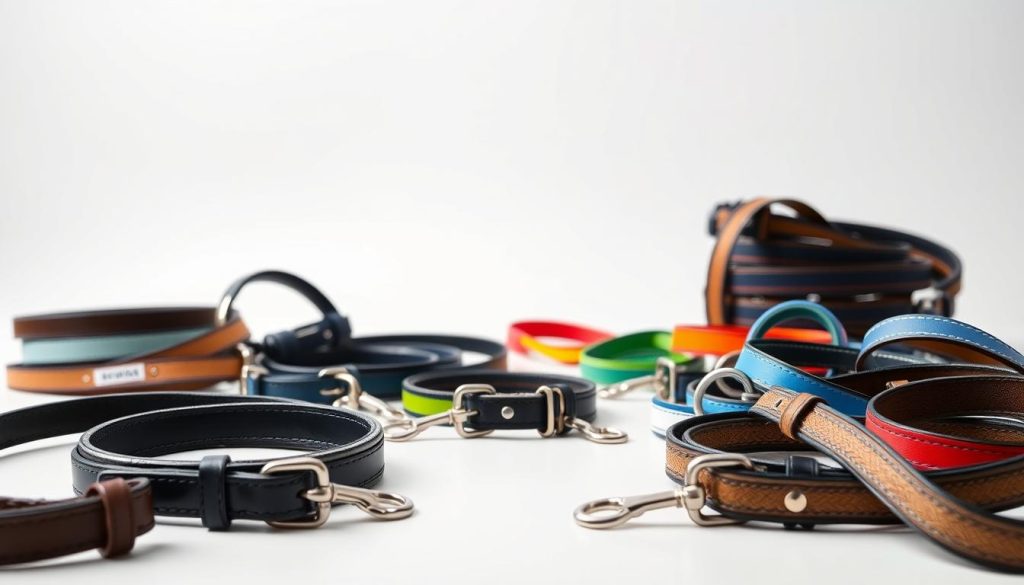
Choosing a dog leash can be tough. You have many options, from nylon to retractable leashes. Each one is best for different dogs. Think about your dog’s size, breed, and how they like to walk.
For big dogs, a strong leather leash is a good choice. Smaller dogs do well with a light nylon leash.
It’s also key to know about dog collars. The most common is the flat collar, great for daily walks. Martingale collars are for dogs with narrow heads, like Greyhounds. They offer control without choking.
But, prong and choke collars should be used carefully. They’re best with a pro trainer’s help.
Adding dog harness benefits to your routine can help a lot. Harnesses spread out the pressure on your dog’s body. This is good for dogs with breathing or neck problems.
They also help control dogs that pull a lot. This makes walks more fun for both of you.
Leash Training Made Easy: Stop Pulling and Enjoy Walks Again
Want a relaxed, stress-free walk with your dog? It’s possible with the right approach. Our easy leash training tips will help manage your dog’s behavior. This makes walks enjoyable. Be consistent and patient to change your walks into a bonding activity.

Teaching your dog to walk calmly by your side is key. Use the techniques and tools we’ve discussed. This will help you control the leash for safe, enjoyable walks. Remember, practice often and celebrate small victories.
With persistence and dedication, leash training can be easy. Trust the process and stay committed. Soon, you’ll enjoy calm strolls with your well-behaved pup.
Step-by-Step Guide to Start Leash Training
Starting leash training is an exciting journey for you and your dog. It needs patience and consistency. Here are the key steps to begin:
First, let your dog get used to the collar and leash. Let them sniff and explore these items to reduce any fear. Attach the collar and start with short periods, then increase the time as they get comfortable.
Next, teach basic commands. Use positive reinforcement like treats and praise for following commands like “sit” and “stay.” Practice these indoors to keep the environment controlled.
Once your dog is comfortable with the collar and commands, attach the leash. Let them drag it around indoors. This helps them get used to the leash without feeling trapped. Start picking up the leash and walk around the house, rewarding them for staying close.

After mastering indoor leash training, move to outdoor practice. Start in a quiet area with few distractions. Use treats and praise to keep your dog’s attention and reward good behavior. Remember, teaching leash manners takes time, so be patient and celebrate small wins.
As you follow these steps, your dog will learn to love walks. Consistency and positive reinforcement are crucial for mastering these skills.
Quick Recommendation: Our blog is filled with tips and tricks for training your puppy or dog. If you’re seeking a comprehensive training program, we recommend K9 Training Institute.
Techniques to Stop Your Dog from Pulling
Training your dog to walk nicely on a leash is all about consistent techniques. The ‘stop-and-go’ method is a favorite. When your dog pulls, stop right away. Start walking again only when the leash is loose. This teaches them pulling doesn’t get them anywhere.
The ‘turn-around’ technique is also effective. If your dog pulls, turn around and walk the other way. This shows them pulling doesn’t lead to their destination. It helps them focus on you and your movements.
Consider the ‘L’ technique too. Walking in an L-shaped pattern keeps your dog’s attention on you. Changing directions often helps your dog follow you better. This corrects pulling behaviors over time.
Using these techniques regularly can greatly improve leash discipline. Remember, consistency and patience are crucial. Stay committed, and you’ll see improvement. Your walks will become more enjoyable for both you and your dog.
Advanced Leash Training Tips
Now that you’ve mastered the basics, it’s time to take your dog’s leash training to the next level. Expert dog walking is more than just walking ahead. It’s about mastering the environment around you.
Learning to navigate crowded areas is key. This is crucial during busy urban walks or dog park visits.
Distractions can be a challenge. To keep your dog focused, use engaging training tools. Clickers provide immediate feedback, while treats are great rewards for good behavior.
Consistent commands and positive reinforcement are essential. They help in mastering leash skills more efficiently.
Varying terrains and environments in your walks is important. Whether it’s a busy city street or a quiet forest trail, changing settings helps your dog adapt. As you progress, add these challenging yet rewarding experiences to your walks. This will turn your routine walks into expert dog walking sessions.
Common Mistakes to Avoid During Leash Training
Leash training your dog can be very rewarding. But, it’s key to know the common mistakes. One big error is using different commands all the time. Dogs love consistency, so always use the same commands.
This helps them understand what you want. It makes training easier for both of you.
Another mistake is pulling too hard on the leash. This can make your dog feel trapped and anxious. Instead, aim for a loose leash. It makes walks more fun and builds trust.
It’s also important not to reward bad behavior. If your dog pulls and you give in, you’re teaching them to pull. Only reward calm walking beside you.
By avoiding these mistakes, leash training gets easier. Remember to be patient and keep at it. This way, you and your dog will enjoy the journey together.
The Importance of Patience and Persistence
Starting leash training can feel tough at first. But every small step is progress. Patience is essential in dog training. Dogs, like people, learn at their own pace.
Keeping a positive attitude is crucial. Don’t get upset if your dog doesn’t learn fast. Celebrate small wins and remember that consistency is key.
Consistency is vital in leash training. Stick to a routine and use the same commands every time. This helps your dog understand what you want.
Training a dog is a long journey. Be realistic and balance training with fun and affection. This makes training a positive experience for your dog.
Real-Life Success Stories
Leash training success is not just possible—it’s a reality for many dog owners. A proud owner in California turned her excitable Labrador into a well-mannered walking companion. With consistent training, her dog now walks calmly, making walks a joy.
A couple from New York also shared their success story. Their once unruly Beagle now walks calmly on a leash. They used the techniques from this guide and showed immense patience, achieving more than they expected.
These stories show that with dedication, patience, and the right methods, anyone can succeed. Whether you’re new to leash training or looking to improve, these testimonials can motivate you. With perseverance and consistency, you can also achieve leash training success.
Helpful Tools and Resources for Leash Training
To make leash training better, using the right dog training aids and leash training accessories is key. The book “The Art of Raising a Puppy” by the Monks of New Skete is a top pick. It offers detailed advice that fits today’s training methods.
Training videos from experts like Zak George on YouTube are also great. They show you how to do things step by step. For treats, Zuke’s Mini Naturals are tasty and easy to carry. Also, consider no-pull harnesses like the PetSafe Easy Walk harness to help stop pulling.
Technology is also important in training today. Apps like Puppr have photo and video tutorials to help you. Using these digital tools with good leash training accessories will help you succeed.
When picking the best recommended dog gear, remember tools like clickers. They help with positive training. The Starmark Pro-Training Clicker is a favorite among trainers. These tools can make training more effective and fun for you and your dog.
When to Seek Professional Help
At times, leash training can be tough, even with your best efforts. If your dog shows signs of aggression, extreme anxiety, or severe pulling, it’s time to get help. Professional dog trainers are experts in these areas and can provide the right guidance.
Knowing when to ask for help is important. It saves time and keeps your dog safe. Signs like persistent bad behavior, not listening to basic commands, and fear or aggression are clear warnings. Trainers can offer solutions that fit your dog’s unique needs.
When picking a trainer, check their credentials and reviews. Look for trainers listed with groups like the Association of Professional Dog Trainers (APDT). Their knowledge can help solve your dog’s problems and improve their life.
Conclusion
Let’s recap the key points from our guide on leash training. It’s important to understand the basics and choose the right leash and collar. Following a step-by-step guide is also crucial.
Using advanced techniques and avoiding common mistakes will help you master leash training. Remember, patience and persistence are key. Success stories show that every dog can enjoy walks without pulling.
Use tools and resources to help you train. If you need extra help, don’t hesitate to seek professional advice. With these tips, you’re ready for stress-free walks with your dog. Enjoy this time to strengthen your bond and have fun together. Happy walking!
Quick Recommendation: Our blog is filled with tips and tricks for training your puppy or dog. If you’re seeking a comprehensive training program, we recommend K9 Training Institute.