

Ever wondered why your dog does things that annoy you, like barking, chewing, or jumping? These behaviors can really test your patience and make your home less fun. This guide will help you understand why your dog acts this way and teach you how to stop it.
You’ll learn effective ways to control chewing and prevent jumping. By the end, you’ll know how to make your home a happier place for both you and your dog.
Quick Recommendation: Our blog is filled with tips and tricks for training your puppy or dog. If you’re seeking a comprehensive training program, we recommend K9 Training Institute.
Understanding Why Dogs Bark
Dogs bark for many reasons. Knowing these can help you deal with too much barking. One big reason is to warn their owners of dangers or strangers. This comes from their past as guard animals.

Another reason is to show excitement or joy. Your dog might bark when you come home or see a favorite toy. It’s like humans shouting with happiness.
Dogs also bark to get attention. If they’re lonely or bored, they bark to get your attention. Knowing this helps you meet their needs better.
Environmental things can also make dogs bark. Sounds, other animals, or new places can trigger barking. The American Veterinary Medical Association says these are common reasons for barking.
Strategies to Prevent Excessive Barking
Understanding why your dog barks is the first step to stop it. Use a mix of training, daily routines, exercise, and deterrents to cut down on barking. Being patient and consistent is crucial for lasting results.
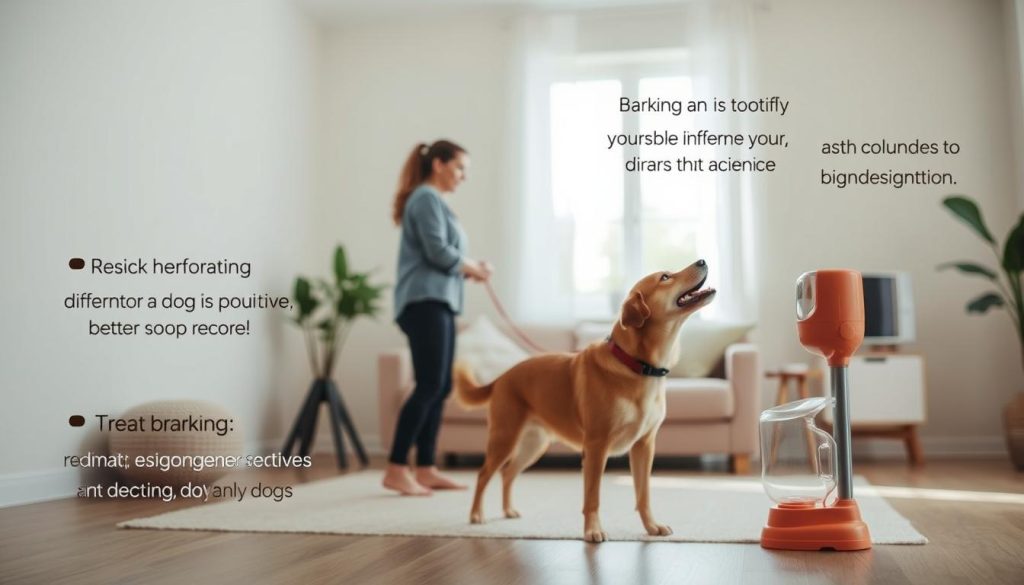
Teaching your dog the “quiet” command is helpful. Rewarding them for being quiet encourages good behavior. Keep your training consistent to avoid confusing your dog.
Having a regular routine makes your dog feel safe and less anxious. This means less barking. Stick to a schedule for meals, walks, and playtime to keep things stable.
Exercise is key. A tired dog barks less. Give your dog daily walks, playtime, and interactive toys to keep them calm and quiet.
Deterrents like ultrasonic devices or sprays can also help. They discourage barking without harming your dog. Use these tools with training for the best results.
Experts and studies back these methods. Remember, being consistent and patient is key. By using these strategies, you can make your home quieter and happier for both you and your dog.
Why Dogs Chew and How to Address It
Dogs chew for many reasons. One big reason is teething in puppies. They chew to ease the pain in their gums. Knowing this helps us understand why puppies chew.

Boredom and anxiety also make dogs chew. When they’re alone for too long, they chew to keep busy or calm down. Giving them the right chew toys and activities helps.
Some dogs chew to learn about their world. They use their mouths to explore. This is especially true for young dogs and puppies. Experts say to give them safe things to chew on.
To stop dogs from chewing, we need to meet their needs and teach them better. By understanding why dogs chew, we can manage this behavior. This keeps our things safe and our dogs happy.
Quick Recommendation: Our blog is filled with tips and tricks for training your puppy or dog. If you’re seeking a comprehensive training program, we recommend K9 Training Institute.
Effective Ways to Stop Destructive Chewing
Dealing with destructive chewing can be tough. But, there are ways to stop it in your dog. First, give them safe chew toys to keep them away from your stuff.
Chew-proofing your home is key. Keep valuable things out of reach. Use barriers to block off certain areas. Dog-proof sprays can also help stop chewing on specific items.
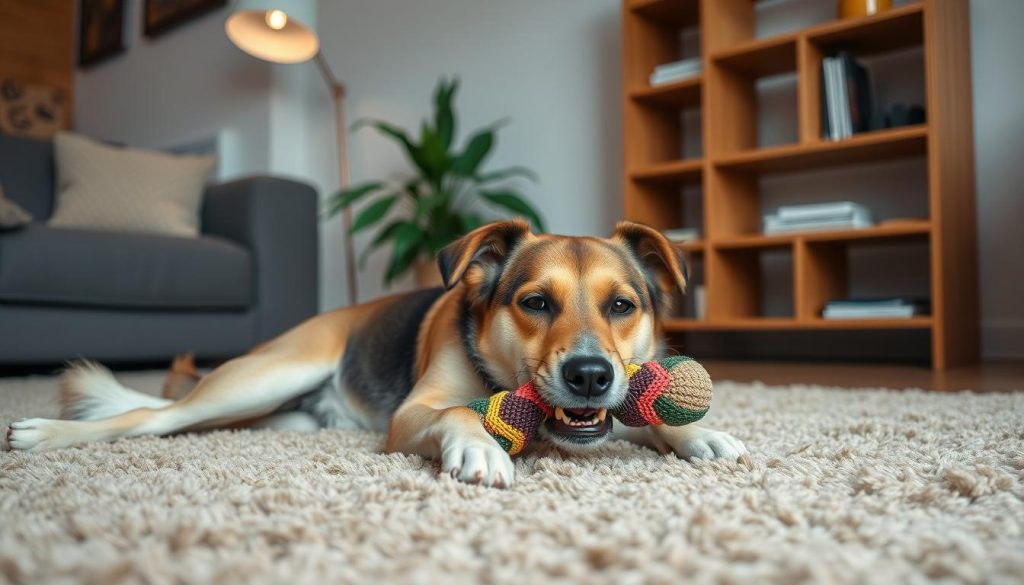
Watching your dog closely is important. Correct them when they chew on the wrong things. Give them praise when they chew on the right ones.
Choosing the right chew toys is crucial. Go for durable ones like KONG or Nylabone. They’re made to last and keep your dog busy and happy.
Using these methods can really help. It makes your home a happier place for both you and your dog. By stopping destructive chewing and giving them safe toys, you save your things and keep your dog happy.
Understanding Jumping Behavior in Dogs
Jumping is a common behavior in dogs. It can come from different reasons. Knowing why your dog jumps is key.
One main reason dogs jump is to greet their owners or guests. This excitement starts when they’re puppies and can last into adulthood if not stopped.
Dogs also jump for attention. Being social animals, they jump to get your interest. If they feel left out or want more play, they might jump more.
Jumping can also be due to excitement and too much energy. High-energy dogs often can’t hold back their excitement, leading to jumps. To stop this, it’s important to know what makes them jump and teach them better ways to behave.
How to Train Your Dog to Stop Jumping
Training your dog to stop jumping is a mix of practical techniques and understanding their behavior. Start by teaching basic obedience like “sit” and “stay.” When they jump, ask them to sit and reward them with treats or praise. This positive reinforcement helps them learn good behavior.
Ignoring your dog when they jump is another good strategy. Dogs jump to get attention. By ignoring them, you show them jumping doesn’t work. When they calm down, give them treats or affection.
Teaching alternative behaviors is also key. For example, teach them to greet guests with a toy instead of jumping. This gives them a new task and stops the bad behavior.
Experts like Zak George support these methods. They say using consistency, redirection, and positive reinforcement works well. Stick to these strategies, and your dog will learn to behave better. This makes life more enjoyable for everyone.
How to Stop Nuisance Behaviors: Barking, Chewing, and Jumping
Managing behaviors like barking, chewing, and jumping needs a solid plan. Use an integrated approach to tackle these issues together. Adopt holistic dog training to balance your training efforts.
First, find out why your dog acts out. It could be boredom, anxiety, or not enough exercise. Holistic training aims to fix the behavior and understand its cause. This way, you can create a plan that fits your dog’s needs.
Studies from top trainers show that mixing discipline with positive reinforcement works. Being consistent and patient is crucial. Changing behavior takes time, but it’s worth it. A complete approach not only stops bad behaviors but also improves your bond with your dog.
Additional Tips for Consistent Training
Keeping up with training is key to changing your dog’s behavior for good. Start by setting a regular training schedule. This makes training easy for both you and your pet.
Being patient is also very important. Dogs, like people, need time to learn and adjust. Remember, setbacks happen, but don’t give up. A positive attitude makes training fun and helps your dog learn good habits.
Experienced dog trainers stress the importance of your training habits. Your actions and reactions teach your dog what’s expected. So, it’s crucial to stay calm and consistent with your commands and reactions.
In short, a structured training plan, patience, and a positive mindset are vital. These habits help make consistent training a part of your daily routine. This leads to lasting changes in your pet’s behavior.
Conclusion
As you finish this guide on managing dog behaviors, think about what we’ve learned. Knowing why dogs bark, chew, and jump is key. It helps you manage their behavior better.
Being consistent and patient is vital. You need to work hard to stop excessive barking, chewing, and jumping. Positive reinforcement, setting rules, and giving them enough to do are important. These steps help you and your dog get along better.
Managing dog behaviors is possible with the right knowledge and effort. You can create a happy home for both you and your dog. Be patient, enjoy the journey, and celebrate your progress. You can do it!
Quick Recommendation: Our blog is filled with tips and tricks for training your puppy or dog. If you’re seeking a comprehensive training program, we recommend K9 Training Institute.