

Ever wondered why some pet owners seem to have perfect control over their furry friends? Others struggle with even basic commands. Could it be that the secret lies in a tiny device known as a clicker?
Dive into the fascinating world of clicker training with this comprehensive guide designed for beginners. Learn how positive reinforcement and Clicker Training techniques make pet training simpler. This method offers a structured way to teach your pets new behaviors efficiently.
What Is Clicker Training?
Clicker training is a way to teach pets using a special device that makes a clicking sound. This device, called the clicker, marks the exact moment a pet does something right. It’s simple and works well, making it easy to talk to your pet.
The main idea is the clicker as a marker signal. When your pet does what you want, you click at that exact moment. This helps them know what they did right, making learning faster.

After the click, a treat or other reward comes. This is a big part of the reinforcement strategy. It makes your pet more likely to do the right thing again. Clicker training makes learning fun for both you and your pet.
Quick Recommendation: Our blog is filled with tips and tricks for training your puppy or dog. If you’re seeking a comprehensive training program, we recommend K9 Training Institute.
Why Use Clicker Training?
Clicker training is a great way to train animals efficiently. It helps you and your pet understand each other better. It makes training fun and simple, which strengthens your bond.
The clicker gives immediate feedback, helping to change bad behaviors into good ones. This is a big plus for training.

Clicker training also makes learning fun for both you and your pet. It keeps your pet motivated and engaged. This leads to a stronger bond and better behavior.
By using clicker training, you improve your relationship with your pet. It makes training clear and fun for everyone. This way, you can teach your pet new things easily.
Types of Clickers
Exploring clicker training means knowing the different devices out there. There are simple handheld clickers and more advanced electronic ones. Each has its own features and benefits, fitting various training needs and likes.
Handheld clickers are the most common and loved by many. They’re cheap, simple to use, and you can take them anywhere. They make a clear click sound that helps your pet learn good behavior. For newbies, a basic handheld clicker is a great place to start.

Electronic clickers, on the other hand, have extra features like adjustable volume and sounds. They’re great for noisy places or pets that are easily startled. With these, you can change the sound to fit your needs, making training easier.
Choosing the right clicker depends on your goals and your pet’s needs. Whether it’s a simple handheld or a fancy electronic one, the most important thing is to be consistent. Each type has its own advantages, and knowing them helps you pick the best for your pet.
Getting Started With Clicker Training
Starting Clicker Training is an exciting adventure for you and your pet. First, pick a quiet, distraction-free spot where your pet feels at ease. This area should help your pet stay focused.
Then, choose treats that motivate your pet. Opt for small, tasty snacks they love. Chicken, cheese, or commercial treats work well. They should be easy to eat quickly to keep training smooth.

Get to know the clicker. It signals to your pet when they do something right. Click it right after they do it and then give them a treat. This helps them learn the click means reward.
Being consistent is crucial in Clicker Training. Short, regular sessions are better than long, rare ones. Keep it fun and positive to make learning enjoyable for your pet.
Quick Recommendation: Our blog is filled with tips and tricks for training your puppy or dog. If you’re seeking a comprehensive training program, we recommend K9 Training Institute.
Basic Clicker Training Techniques
Starting with Clicker Training means teaching your pet basic exercises and commands. It’s about using the clicker as a signal to reward good behavior. This helps your pet learn quickly.
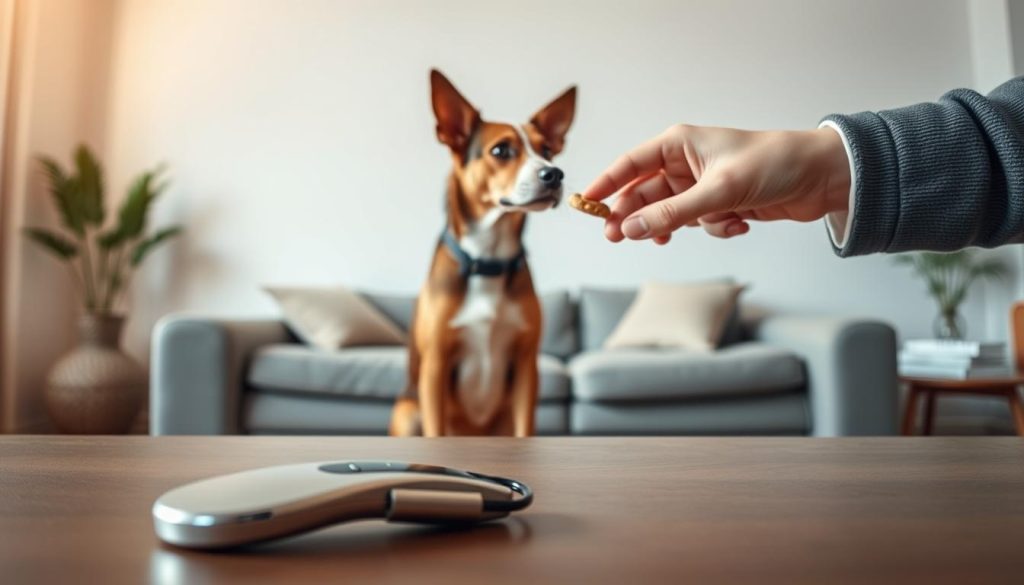
First, get a good clicker and some treats your pet loves. Introduce the clicker sound and give a treat right after. This helps your pet connect the sound with a reward.
Then, teach simple commands like “sit,” “stay,” and “come.” For “sit,” wait for your pet to sit, then click and treat. Keep doing this until they learn to sit for the reward.
Shaping is a key part of Clicker Training. It breaks down big behaviors into small steps. Reward each step with a click and treat. This helps you and your pet communicate better.
Timing is everything in Clicker Training. Click right when your pet does what you want. This helps them link the action to the reward. Rewarding them right away makes this connection strong.
Make these techniques part of your daily routine. With patience, your pet will learn Clicker Training commands fast. It will make training fun and strengthen your bond.
Advanced Clicker Training Exercises
Once you’ve mastered the basics, it’s time to move on to advanced exercises. Teaching complex commands and practicing behavioral chaining can greatly improve your pet’s skills and response. This will take your Clicker Training to the next level.
Behavioral chaining links multiple behaviors together. For example, you can teach your dog to fetch a toy, bring it back, and then sit. Each action is a link in the chain. Start by breaking down complex commands into smaller steps. Use the clicker to mark and reward each step when it’s done right.
Complex commands are a big part of behavioral chaining. Commands like “roll over” or “play dead” require several steps. Start with simple actions and build up the sequence. Make sure each step is consistently rewarded with the clicker and positive feedback.
Remember, patience and consistency are crucial as you advance. Every pet learns at their own pace. Celebrate small victories to keep training fun for both you and your pet. With time and effort, these advanced exercises will become part of your routine.
Common Mistakes and How to Avoid Them
Clicker training is a great tool, but it has its own training pitfalls. Knowing these mistakes and how to fix them can really help you succeed.
One big mistake is not using the clicker consistently. Your pet needs to know when they do something right. Make sure to click only when they do what you want them to do.
Timing is also key. If you click too soon or too late, you might teach the wrong thing. Practice your timing to avoid this training pitfall.
Lastly, let’s talk about Clicker Training corrections. If your pet makes a mistake, don’t punish them. Instead, guide them back to the right behavior and reward them for it. This way, learning is fun and keeps your pet interested.
Clicker Training for Different Pets
Clicker Training is great for many animals. It works for dogs, cats, birds, and even guinea pigs. Each pet learns in its own way, making training more effective.
Dogs learn quickly because they love to please. Teach them basic commands like sit and stay. Cats need patience. Use clicker training to get them to come or do tricks.
Bird owners can teach their pets to step up or fetch. It shows how clicker training works for all kinds of pets.
Small mammals like rodents can also learn with a clicker. They enjoy simple tasks like mazes or standing on hind legs. It keeps them engaged and happy.
Clicker training is perfect for many pets. With a bit of effort, you can talk to your pet in their own language. It’s a great way to connect with your furry or feathered friend.
Troubleshooting Clicker Training
Even with the best techniques, you might face challenges while clicker training your pet. It’s important to quickly solve these issues to keep training fun and effective. A common problem is when your pet doesn’t understand commands.
In such cases, clear Clicker Training guidance is crucial. Go back to the basics and make sure your timing with the clicker is spot on.
Overcoming obstacles requires patience and flexibility. If your pet isn’t responding to the clicker, check for distractions. Reducing these can help your pet stay focused.
Also, consider if your rewards are exciting enough. Sometimes, a more appealing treat can make a big difference.
Communication barriers can also be a challenge. Make sure you’re consistent with commands and clicks. Inconsistent signals can confuse your pet and slow their progress. If problems persist, getting professional Clicker Training guidance can help.
Remember, every pet learns at their own speed. Be patient and consistent to overcome obstacles and keep making progress in your clicker training journey.
Clicker Training 101: A Beginner’s Guide to This Popular Method
Welcome to Clicker Training 101! This guide is perfect for beginners. You’ve learned the basics and advanced exercises.
Our guide covers the different types of clickers and how to start. It’s important to learn the basics first. This ensures a strong foundation for you and your pet.
We also talked about avoiding mistakes and troubleshooting. These tips are useful for training any pet. Clicker Training is versatile and effective for different animals.
Remember, patience and consistency are key. By following this guide, you’ll be ready to use Clicker Training. It will help create a positive training environment for you and your pet.
Conclusion
Starting a pet training journey with clicker training is very rewarding. It helps you communicate clearly with your pet. This makes training successful. Remember, being patient and consistent is crucial for success.
Clicker training improves your pet’s behavior and strengthens your bond. You’ll go from simple commands to complex tricks. Every small win is a step towards success. Don’t worry about mistakes; they help you learn.
Clicker training is a skill and an art. Enjoy the journey, celebrate your wins, and spend quality time with your pet. With dedication, you’ll see big improvements. This will make your life and your pet’s life better. Happy training!