

“The greatness of a nation and its moral progress can be judged by the way its animals are treated.” – Mahatma Gandhi
Training a stubborn dog can feel like a tough challenge. But remember, every dog is different and needs a special approach. It’s not just about following commands. It’s about building trust and respect.
If you’re finding it hard to manage a challenging dog breed, you’re not alone. Many owners have faced these issues. They’ve learned that patience, consistency, and positive reinforcement are key.
Understanding your dog’s personality and behavior is crucial for effective training. Stubborn dog training can be tough, but the bond you build will be worth it. Are you ready to learn the best dog training strategies? Let’s explore how to turn tough moments into chances for growth and connection.
Quick Recommendation: Our blog is filled with tips and tricks for training your puppy or dog. If you’re seeking a comprehensive training program, we recommend K9 Training Institute.
Understanding Your Dog’s Behavior
Understanding your dog’s actions is key to effective training. A deep dive into dog behavior analysis means watching and decoding signs like tail wagging and ear positions. These signs help you grasp your pet’s feelings and what they want.

Dogs communicate through both sounds and body language. Spotting these cues helps you figure out why they behave in certain ways. For instance, barking can mean they’re excited, scared, or need attention. Knowing what causes these behaviors lets you tackle them head-on.
Dr. Stanley Coren, a renowned psychologist, stresses the value of these insights. They help you craft training plans that fit your dog’s natural behavior. This approach makes training smoother and more effective for both you and your dog.
Establishing Leadership Without Force
Being a leader doesn’t mean you have to be forceful. Positive leadership is key in training any dog, especially stubborn ones. It’s about building a strong bond through trust and love, not dominance.

The alpha dog myth is outdated and wrong. It promotes an aggressive approach that can make your dog feel scared and mistrustful. Instead, using force-free methods creates a safe and respectful space. This way, you become a firm but kind leader.
Bond-based training is about working with your dog, not against them. It guides them to good behavior while building a strong bond. This method not only improves training but also makes it fun for both of you.
Effective Training Techniques for Stubborn Dogs
Training a stubborn dog can be tough, but the right methods can help a lot. Reward-based training is key. Give your dog treats, praise, or toys when they do something good. This makes them want to do it again.
Being consistent is crucial. Use the same commands for the same actions. Pick a word or phrase for each command and stick to it. This helps your dog know what you mean.

Rewarding good behavior is important too. When your dog does something right, praise them or give a treat. This shows them the link between their actions and rewards.
For tough dogs, try breaking tasks into smaller steps. Start with simple commands and add more as your dog gets better. Make sure they can do each step before moving on.
Experts like Cesar Millan say patience and persistence are key. Training a stubborn dog takes time and effort. But if you stay consistent and reward good behavior, you’ll see lasting results.
Socialization is Key
Socialization is key when training stubborn dogs. It offers many benefits and shapes their behavior. By exposing your dog to different places, people, and animals, you help them grow and adapt.
Puppy socialization classes are a great start. They provide a place for your puppy to meet others, learn social cues, and understand right behavior. This is vital for building confidence and reducing fear.
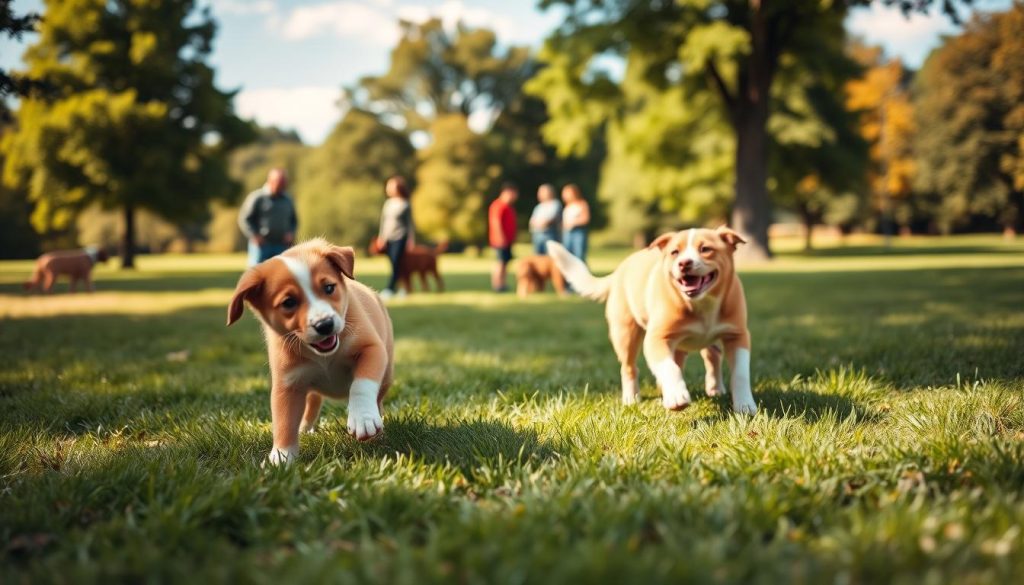
Regularly introducing your dog to new things helps avoid fear or aggression issues. Whether it’s a park visit, meeting new people, or joining puppy classes, these activities boost confidence. They make sure your dog is well-adjusted and a happy family member.
Addressing Specific Behavioral Problems
Dealing with dog aggression requires the right strategies. It’s key to find out what triggers their behavior. Things like loud noises or unexpected visitors can be big triggers. A vet behaviorist can help figure out the cause and create a plan.
For barking issues, teaching a “quiet” command helps. Also, keep your dog busy with mental games and toys. This can reduce barking. Toys and games can distract them from barking.
Chewing problems? Use sprays and safe chew toys as deterrents. Give them things to chew on instead of furniture. Keep things they shouldn’t chew on out of reach and watch their habits.
With these strategies, you can handle common behavioral issues. Every dog is unique, so adjust your approach to fit your pet’s needs.
Quick Recommendation: Our blog is filled with tips and tricks for training your puppy or dog. If you’re seeking a comprehensive training program, we recommend K9 Training Institute.
Importance of Regular Exercise and Mental Stimulation
Getting your dog enough exercise and mental challenges is key to their behavior and health. Regular canine fitness routines keep them physically fit. It also helps burn off excess energy, which stops boredom in its tracks.
Mental enrichment activities are a must for your dog’s daily life. Puzzle toys, scent games, and learning new tricks are great. For stubborn dogs, mixing mental tasks with physical exercise works wonders. A dog that’s both mentally and physically active is less likely to misbehave.
It’s all about finding the right balance for a well-behaved dog. Whether it’s a walk, agility training, or puzzles, these activities make your dog happy. They also strengthen your bond with them.
Using Professional Help When Needed
Managing tough dog behaviors can be tough. That’s where dog behavior specialists and certified trainers come in. They’re experts in handling various issues and can create a plan just for your dog. Getting help early can stop small problems from getting bigger.
Knowing when to see a vet behaviorist is key. They can find medical reasons behind your dog’s behavior. A vet behaviorist can help figure out the cause, whether it’s health or environment.
Professional training can really help. Certified trainers use special methods to fix bad behaviors and encourage good ones. Their programs and hands-on training help you and your dog understand each other better. Asking for help is a smart move for a better relationship with your dog.
Maintaining Patience and Persistence
Training a stubborn dog requires a long-term commitment. It’s not easy, but it’s essential for success. Overcoming setbacks is a big challenge. It’s crucial to stay positive when your dog seems to resist.
Patience is crucial. Training takes time, and it’s normal to feel frustrated. But, focusing on small wins is key. Celebrate every step forward, no matter how small.
Staying motivated can be hard. Remember why you started and think about the end goal. Every effort you make is part of your commitment to your dog and your relationship.
Using Technology in Training
Technology has many tools to help with dog training. Training apps for dogs are very popular. They guide you through training, remind you of sessions, and offer tips for behavior management. Many apps also have video tutorials to show you how to do things.
Electronic dog collars are another great tool. They help correct behaviors with gentle feedback. These collars have features like vibration, tone, and static stimulation. But, it’s important to use them right to avoid harming or stressing your dog. Used correctly, they can be very effective, especially for stubborn or large breeds.
GPS tracking devices are also very useful. They can be attached to your dog’s collar, letting you track their location in real-time. This is great if your dog likes to wander or if you take them on wilderness adventures.
Last but not least, interactive dog toys are essential. They provide mental and physical stimulation, which is key for a well-rounded training program. These toys keep your dog engaged, preventing boredom and destructive behavior. By using these tech tools, you can create a comprehensive training approach that really works.
Conclusion
Starting a dog training journey can be tough, especially with stubborn breeds. It’s key to understand your dog’s behavior and lead without force. Using the right training methods is also crucial.
Early socialization and tackling behavioral issues are important steps. They help build a strong foundation for your dog. Regular exercise and mental games are vital to manage your dog’s energy.
Don’t be afraid to ask for professional help when needed. Sometimes, an expert’s advice can be a game-changer. Being patient and consistent is essential for positive changes in your dog’s behavior.
Technology can also be a great tool in dog training. By mastering these strategies, you’ll not only train your dog but also strengthen your bond. Remember, it’s about making progress, not being perfect. With dedication, you’ll enjoy a rewarding relationship with your dog.
Quick Recommendation: Our blog is filled with tips and tricks for training your puppy or dog. If you’re seeking a comprehensive training program, we recommend K9 Training Institute.