

Ever wondered why some puppies turn out well-behaved, while others face behavioral issues? The key is early training. Starting puppy training from day one builds a strong bond and prevents future problems.
We’ll show you how to create a welcoming space and use patience and positive reinforcement. Early training leads to a lifetime of good habits and joy. Are you ready to start? Let’s begin!
Understanding Your Puppy’s Behavior

Getting a new puppy is incredibly exciting. But knowing how to interpret their actions is crucial. It’s important to recognize various developmental stages and common behaviors like biting, chewing, and playfulness.
Puppies communicate a lot through body language. It’s key to be observant and aware. For example, a wagging tail shows happiness, while a tucked tail might mean fear. Knowing these signals helps in effective communication with your pet.
Interpreting puppy actions like constant biting and chewing is also vital. These behaviors are often due to teething or exploring. Giving them the right chew toys can help prevent damage to furniture or shoes.
Lastly, understanding puppy body language helps you connect better with your furry friend. Watch for signs of distress or joy. This ensures you meet their emotional and physical needs well. This understanding makes training more effective and fun for both you and your puppy.
Quick Recommendation: Our blog is filled with tips and tricks for training your puppy or dog. If you’re seeking a comprehensive training program, we recommend K9 Training Institute.
Choosing the Right Training Tools
Starting to train your new puppy? The right *puppy training tools* are key. They help with basic commands and advanced exercises. The right *training accessories* are a must.
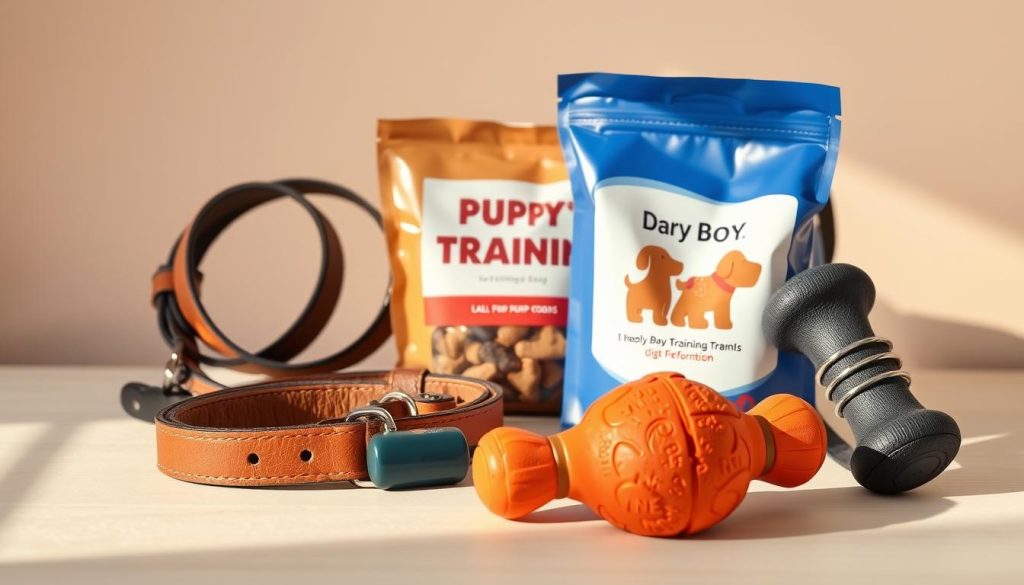
Leashes and harnesses are crucial *essential dog training gear*. A good leash and comfy harness keep your puppy safe and in control. Look for brands like Ruffwear and PetSafe for quality options.
Clickers are also important *essential training products*. They make a sound to tell your puppy they’re right. Clicker training is effective for positive behaviors. Check out Karen Pryor and EcoCity for reliable clickers.
Treat bags are a must-have *training accessories*. They keep your puppy’s favorite treats handy for rewards. Paw Lifestyles and Kurgo offer durable treat bags for easy training.
Choosing *essential dog training gear* is more than just convenience. It’s about creating a safe learning space for your puppy. Always pick quality and safety for a happy, well-trained dog.
Creating a Consistent Routine
Creating a good training routine for your puppy is key for a smooth start in their new home. A consistent schedule makes your puppy feel safe and settled. It means setting regular times for meals, potty breaks, play, and training every day.
Starting a daily dog training plan is a big step. Puppies love routine, so try to do things at the same time every day. Begin with a potty break and then breakfast. After eating, play with your puppy and then do a short training session.
Keep repeating this pattern all day to make a balanced schedule. This routine not only teaches good behavior but also strengthens your bond with your puppy. It helps them learn what you expect and keeps them mentally sharp.
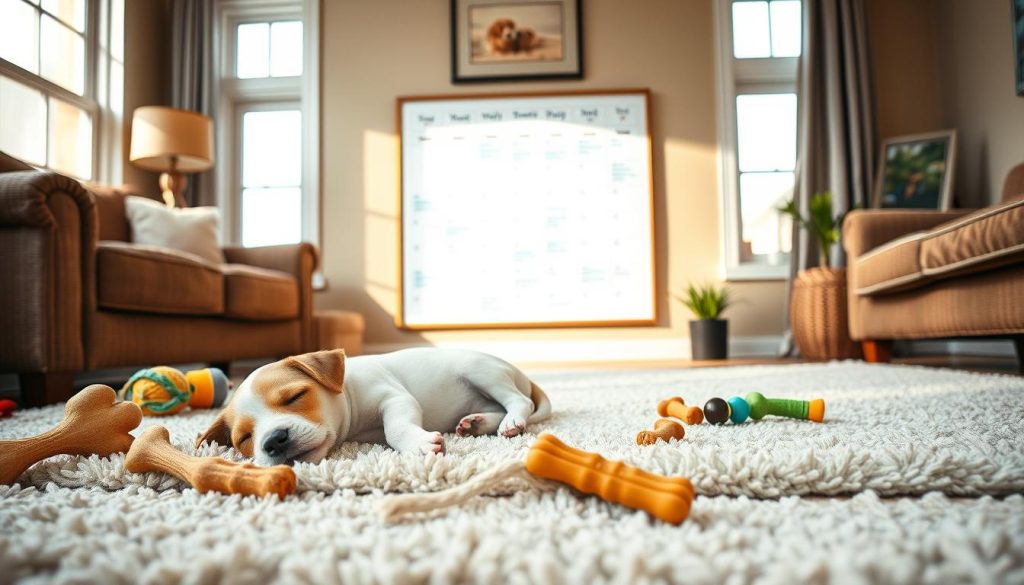
Adding a consistent schedule to your life helps build good habits and lessens stress for both you and your puppy. Begin with simple steps and add more as your puppy grows and learns. Always be patient and keep going to make a routine that works for both of you.
Introduction to Basic Commands
Starting with the basics is key in puppy obedience training. Teaching sit and stay should be among the first steps. These commands lay the groundwork for more complex training later on. Positive reinforcement and patience are essential in teaching your puppy.
To start, teach the “sit” command. Hold a treat near your puppy’s nose and move it up. This will naturally make them sit. Say “sit” and give them the treat with lots of praise. Do this several times a day until they learn the command well.
Then, introduce the “stay” command. Have your puppy sit, then open your palm and say “stay.” Take a few steps back and reward them with a treat and praise if they stay. Increase the distance as they get better at staying.
These basic commands help teach sit and stay. They also teach discipline and focus. Remember, be consistent, patient, and positive. Make these first commands fun and rewarding for both you and your puppy.
Quick Recommendation: Our blog is filled with tips and tricks for training your puppy or dog. If you’re seeking a comprehensive training program, we recommend K9 Training Institute.
Socializing Your Puppy with Other Dogs and People
Proper puppy socialization is key for a well-adjusted adult dog. Introduce your puppy to many new people, animals, and places. The best time for this is between 3 to 14 weeks old.
Start introducing your puppy to strangers when they are young. Make sure each meeting is positive. This helps build their confidence and social skills.
When meeting other dogs, choose friendly and vaccinated ones. Always watch these meetings to avoid any bad behavior. Dog parks and puppy classes are great for exposing them to different situations.
Don’t force your puppy into situations they’re not ready for. Use treats and praise when they act calm and curious. Introduce them to all kinds of people, like children and people in uniforms. This helps them become well-rounded and social.
House Training Your Puppy
House training your puppy is a key step in welcoming a new furry friend. It requires consistency and patience. Choose a spot for your puppy to go potty and make a schedule for them.
Using a crate is a great potty training technique. It teaches your puppy where to go and makes them feel safe. Make sure the crate is comfy and not a punishment.
Use puppy pads to help with toilet training, especially at first. Slowly move to outdoor potty areas. Always praise or treat your puppy when they use the right spot.
Accidents happen, and it’s important to handle them well. Clean up accidents quickly with an enzyme cleaner. This helps avoid them in the same spot again. Remember, patience and persistence are crucial as your puppy learns.
Dealing with Common Puppy Issues
As a new puppy owner, you might face issues like chewing, nipping, and jumping. Knowing why your puppy does these things is crucial. It’s the first step to solving these problems.
Puppy chewing is a natural act for teething pups. To protect your stuff, you need good solutions. Give your pup chew toys to chew on instead. Always watch your puppy and praise them for chewing the right things.
Managing puppy nipping requires consistency. Puppies nip during play or when they’re excited. Teach them to chew on toys instead of your hands or feet. Say “no” firmly and stop playtime to show them nipping is wrong.
Stopping puppy jumping is another challenge. Teach your pup to sit instead of jumping. When guests come, ignore your puppy until they sit calmly. Then, give them praise and treats. This way, your puppy learns sitting gets them attention.
By tackling these common puppy problems, you can raise a well-behaved and happy dog. Make sure your puppy has the right outlets for their energy and instincts. This will create a peaceful home for everyone.
Advanced Training Tips
Once your puppy knows the basics, it’s time for advanced training. This phase aims to improve obedience with complex techniques. Start by teaching tricks like rolling over or fetching specific items.
These activities keep your puppy’s mind sharp and strengthen your bond. Agility training is also great for physical and mental challenges. Setting up obstacle courses in your backyard is a fun way to practice.
Keep your puppy engaged and motivated with varied training sessions. Games can prevent boredom. Always use positive reinforcement to keep your puppy eager to learn.
Exploring dog sports like flyball or Frisbee is also beneficial. These activities provide physical exercise and teach teamwork and discipline. They help in furthering your puppy’s education.
Remember, advanced dog training is a continuous journey. Regular practice and staying in tune with your puppy’s progress are crucial. Keep introducing new tricks and activities to improve their obedience and well-being.
Conclusion
Starting your puppy’s training journey is a path filled with patience and rewards. It’s about understanding their behavior and picking the right tools. Keeping a routine is key to raising a well-trained dog.
Teaching basic commands and socializing with others boosts your puppy’s confidence. It also strengthens your bond. This is a crucial part of their development.
House training and solving common issues need a lot of effort and understanding. As your puppy grows, adding new training tips keeps things interesting. This journey is about ongoing education for your pet, making them a well-behaved and happy friend.
Training your puppy is a continuous effort. Your commitment to their education and well-being will create a strong bond. By focusing on their training, you’re building a future filled with harmony. Remember, the journey is as fulfilling as the end result.
Quick Recommendation: Our blog is filled with tips and tricks for training your puppy or dog. If you’re seeking a comprehensive training program, we recommend K9 Training Institute.