

What if the secret to a well-behaved dog is positive reinforcement? In dog training, positive reinforcement is more than a trend. It’s backed by behavioral science. This method not only works but also deepens your connection with your dog.
Exploring the science behind positive reinforcement can change your training sessions. It turns them into chances for growth and respect. Learning why this method works is key to better behavior and stronger bonds. Are you ready to see why rewarding your dog is a smart choice?
Quick Recommendation: Our blog is filled with tips and tricks for training your puppy or dog. If you’re seeking a comprehensive training program, we recommend K9 Training Institute.
Understanding Positive Reinforcement
Positive reinforcement is key in changing behavior and operant conditioning. It’s about rewarding good actions to make them happen more often. For example, when you give your dog a treat for sitting, you’re using positive reinforcement.
Giving a treat or praise right after your dog does something good shows you value it. B.F. Skinner showed that actions followed by good results become habits.
For dog training, knowing about positive reinforcement is vital. Dogs learn fast that their actions get rewards. This helps change their behavior in a kind and effective way.
The Science Behind Positive Reinforcement
Exploring the neurobiology of learning reveals how the brain reacts to positive reinforcement. At the heart of this is the dopamine reward system. Dopamine, known as the “feel-good” neurotransmitter, is released when dogs get a reward. This makes them more likely to do the behavior again.
Research proves this method is very effective. For example, when a dog expects a treat, their dopamine levels go up before they get it. This anticipation and pleasure reinforce the behavior. Training methods that use positive reinforcement focus on timing and consistency to work with the brain’s natural responses.
By grasping the science of learning and using the dopamine reward system, you can train your dog better. This method is backed by science and strengthens your bond with your dog through positive interactions.
Benefits of Positive Reinforcement for Dogs
Positive reinforcement training has many benefits for you and your dog. It strengthens your bond by rewarding good behavior. This builds trust and respect, making training more fun and effective.
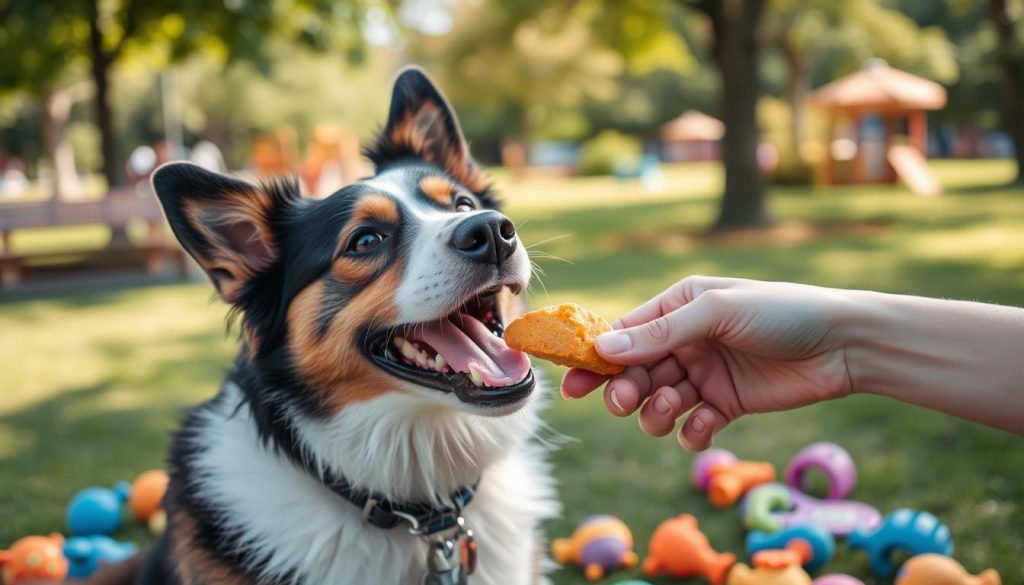
It also helps reduce your dog’s anxiety. Traditional methods can stress them out. But positive reinforcement rewards good behavior, creating a calm and positive space.
This approach makes your home more peaceful. Instead of scolding, you reward good actions. It prevents behavioral problems and keeps your home calm.
Experts like animal behaviorists agree on these benefits. Dogs trained positively are more adaptable and responsive. Using positive reinforcement, you and your dog can have a better, more enjoyable relationship.
How Positive Reinforcement Differs from Other Training Methods
The debate on punishment versus reward in dog training has been ongoing. Traditional methods often use aversive techniques, like dominance and punishment. These might work fast but come with big downsides.
Positive reinforcement stands out by being kinder. It rewards good behavior, unlike punishment which can scare and upset your dog. This makes learning fun and strengthens your bond.
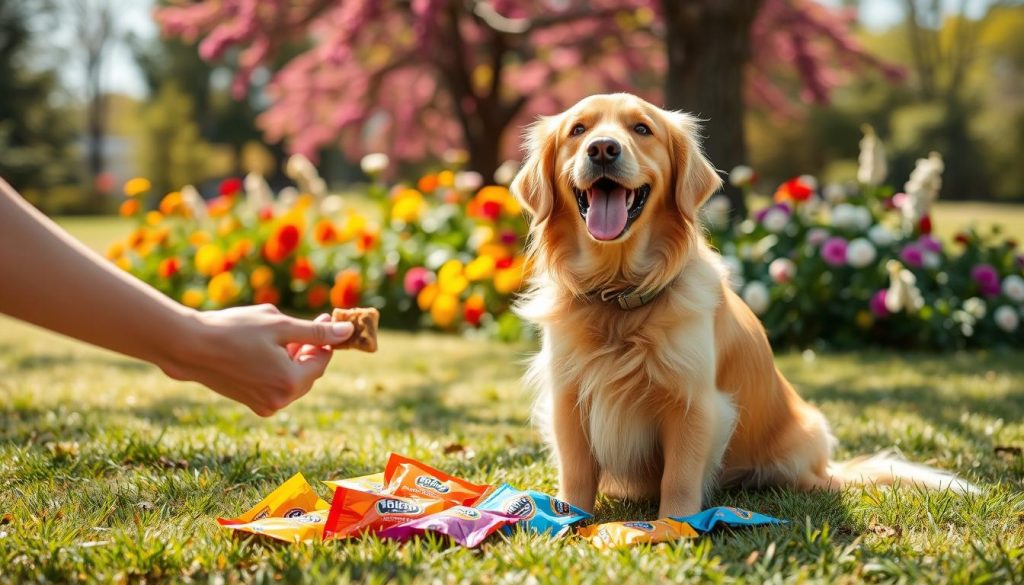
Experts and animal welfare groups say positive reinforcement is the best way to train. It works well for obedience without the harm of harsh methods. This approach keeps your dog happy, well-behaved, and excited to learn.
Basic Principles of Effective Positive Reinforcement
Using positive reinforcement in dog training is a great way to encourage good behavior. But, to do it right, you need to know and follow some basic rules. Being consistent is crucial. Dogs like knowing what to expect, so always reward the same behaviors.
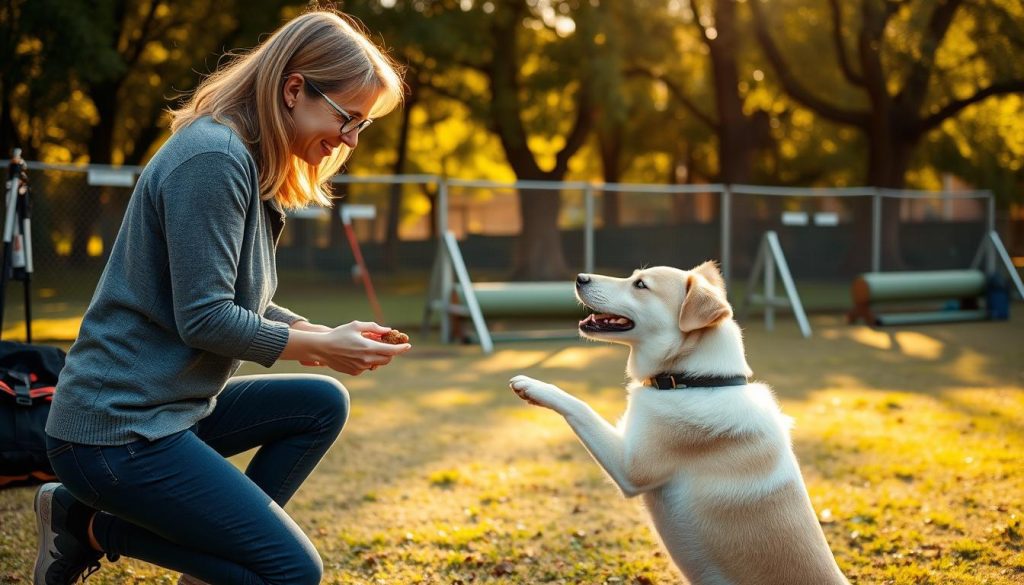
Timing is very important. Giving rewards right away helps your dog connect their actions with the reward. This immediate feedback makes the behavior stronger than waiting too long.
Shaping behavior is also key. It means breaking down big behaviors into small steps and rewarding each one. For example, to teach your dog to fetch, start by rewarding them for picking up the toy. Then, gradually ask for more until they bring it back to you.
By combining consistency, immediate rewards, and shaping behavior, you get a solid training approach. This makes training sessions more productive and fun. These principles help you shape your dog’s behavior positively, making training a good experience for both of you.
Quick Recommendation: Our blog is filled with tips and tricks for training your puppy or dog. If you’re seeking a comprehensive training program, we recommend K9 Training Institute.
Common Mistakes to Avoid
Positive reinforcement is a great way to train dogs, but some mistakes can slow you down. One big error is using rewards that don’t excite your dog. Choose something they really love, like treats, toys, or hugs. If not, they might not want to do it again.
Another mistake is being inconsistent. Dogs learn best when they know what to expect. If you reward them one day but not the next, they get confused. Always reward good behavior to help them understand.

Lastly, don’t confuse negative reinforcement with rewards. For example, if you give a treat when your dog stops barking, you’re rewarding the barking. Make sure your rewards are for the right behavior at the right time.
By avoiding these mistakes, you can make training more fun and effective for both you and your dog. Successful training means using the right rewards, being consistent, and avoiding negative reinforcement.
Choosing the Right Rewards
Choosing the right rewards is crucial when training your dog. Knowing your pet’s reward preferences keeps them motivated. A good mix includes high-value treats for dogs, toys, and non-food rewards like praise and playtime.
High-value treats, like small pieces of chicken or cheese, are very effective. Use them sparingly in training to keep them special. Toys and games are also great non-food rewards. A favorite toy can make training feel like play, if it fits your dog’s reward preferences.
Every dog is unique, and what works for one might not work for another. Watch how your dog reacts to different rewards to find out what they like best. Tailoring your rewards to their preferences will make your training sessions more effective.
Implementing Positive Reinforcement in Daily Life
Adding positive reinforcement to your daily life can be very rewarding for you and your dog. It’s all about making these methods a regular part of your training. This way, your dog learns to expect good behavior and it becomes a natural part of their life.
Look for everyday moments to use behavior reinforcement. For example, give your dog a treat for sitting calmly while you get their food. Or, reward them for coming to you when called at the park. These moments make training real and meaningful.
Being consistent in your training is crucial. Always be ready to reward your dog when they show the right behavior. This strengthens the link between the action and the reward.
Positive reinforcement isn’t just for training sessions. Using it in your daily life reinforces good habits. This helps your dog learn to behave well in different situations.
Being creative with rewards is important too. You can use treats, toys, praise, or even petting. The reward should be timely and relevant, so your dog knows they did something good.
By using these methods every day, you create a more harmonious and well-behaved pet. Positive reinforcement makes training a natural part of your routine. This leads to lasting, positive changes in your dog’s behavior.
The Role of Timing in Positive Reinforcement
Timing is crucial for positive reinforcement to work well. Immediate rewards are key for effective training. When you reward your dog right after they do something good, they learn fast.
They understand what action gets them the reward. This quick feedback is important for them to learn.
Knowing when to reward your dog makes training better. Dogs learn best when they get a reward right after they do what you want. If you wait too long, they might get confused.
So, being consistent and quick with rewards is important. It helps them learn good behavior.
Getting the timing right makes training more effective. When you reward your dog right away, they learn faster. This makes training sessions more fun for both of you.
Case Studies: Success Stories with Positive Reinforcement
Positive reinforcement has shown its power in many real-life examples. Bella, a German Shepherd, was once plagued by severe anxiety. Her owners used positive reinforcement to help her. They saw a big change in Bella, who became more social and calm.
Max, a Labrador, was once aggressive towards other dogs. But with positive reinforcement, he changed completely. Now, he loves playing with his dog friends, showing the power of these methods.
Coco, a Poodle, was scared of loud noises. Her owners used rewards for calm behavior. This helped Coco a lot. Stories like these show how positive reinforcement improves dogs’ lives, making it a great training method.
Conclusion
Positive reinforcement is a top dog training method. It uses science to reward good behavior. This method is more than just commands; it’s about understanding and caring for your dog.
By focusing on what your dog does right, you encourage better behavior. This also strengthens your bond with your pet. It’s based on trust and respect.
Positive reinforcement does more than just train dogs. It boosts their confidence and reduces bad behavior. It makes training fun for both you and your dog.
This method avoids fear and anxiety. It creates a safe space for your dog to learn and grow. By using rewards correctly, you help your dog learn faster.
Positive reinforcement is backed by animal behavior and psychology. It has many success stories. Whether you’re training a puppy or an older dog, this method is effective and rewarding.
By using positive reinforcement, you and your dog can have a stronger, happier bond. It’s a compassionate and scientific way to improve your dog’s behavior.
Quick Recommendation: Our blog is filled with tips and tricks for training your puppy or dog. If you’re seeking a comprehensive training program, we recommend K9 Training Institute.