
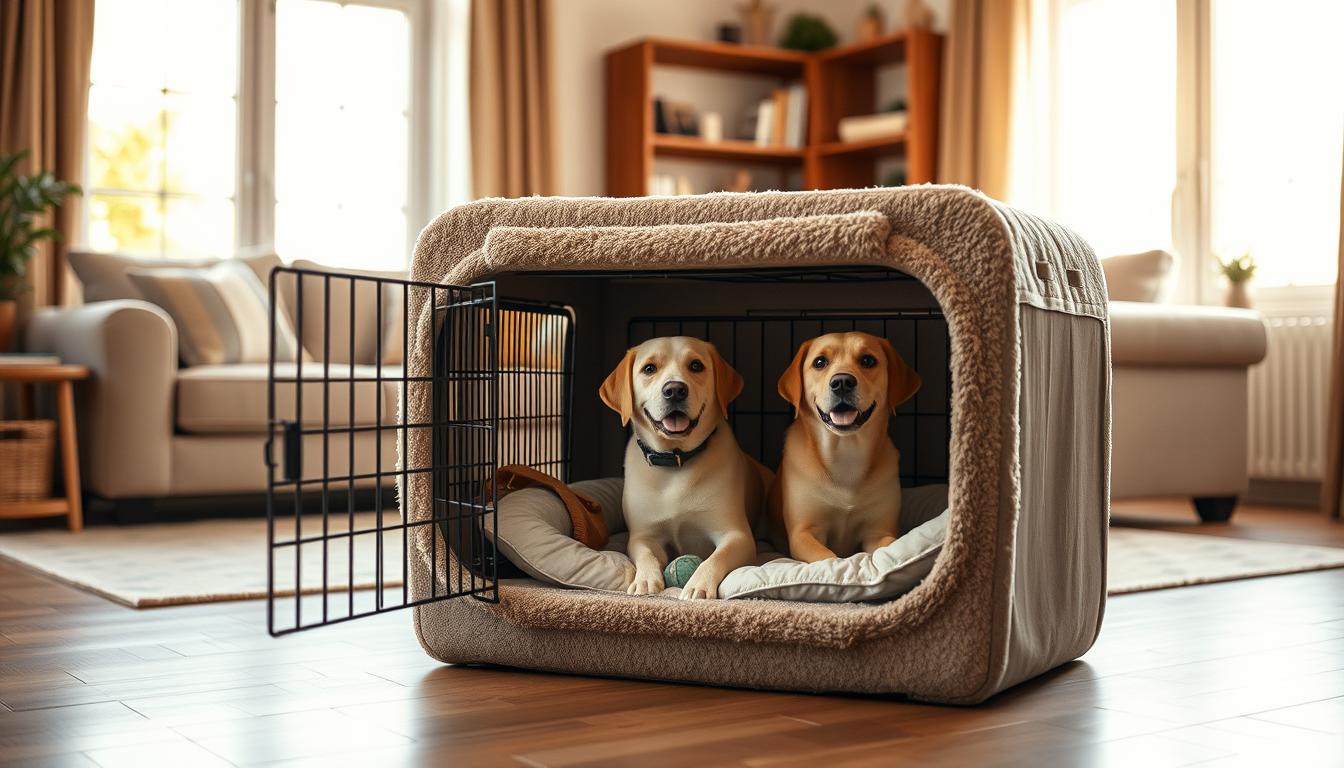
Have you ever seen your dog curl up in a small spot, like under your desk? This is because they have an instinct to find cozy, safe places. It’s like they’re following their ancestors’ lead, making crate training a positive experience for both of you.
Imagine giving your dog a cozy spot where they feel safe and happy. This is what crate training can do for them. It keeps them safe and comfortable.
In this crate training guide, we’ll show you how to make crate training easy and fun. You’ll learn about the many benefits of this training method. Plus, how to set up a crate that feels like a welcoming home for your dog. Are you ready to help your dog find their new safe spot?
Quick Recommendation: Our blog is filled with tips and tricks for training your puppy or dog. If you’re seeking a comprehensive training program, we recommend K9 Training Institute.
Why Crate Training is Important
Understanding why crate training is important can change how your dog behaves at home. It taps into a dog’s instinct to have a den-like space. This safe area provides dog safety and a place to relax and feel protected.
Crate training is also great for potty training. It helps your dog hold their bladder, teaching them good bathroom habits. This method works well for puppies and adult dogs who are still learning. It also stops destructive chewing by keeping your dog away from off-limits areas.
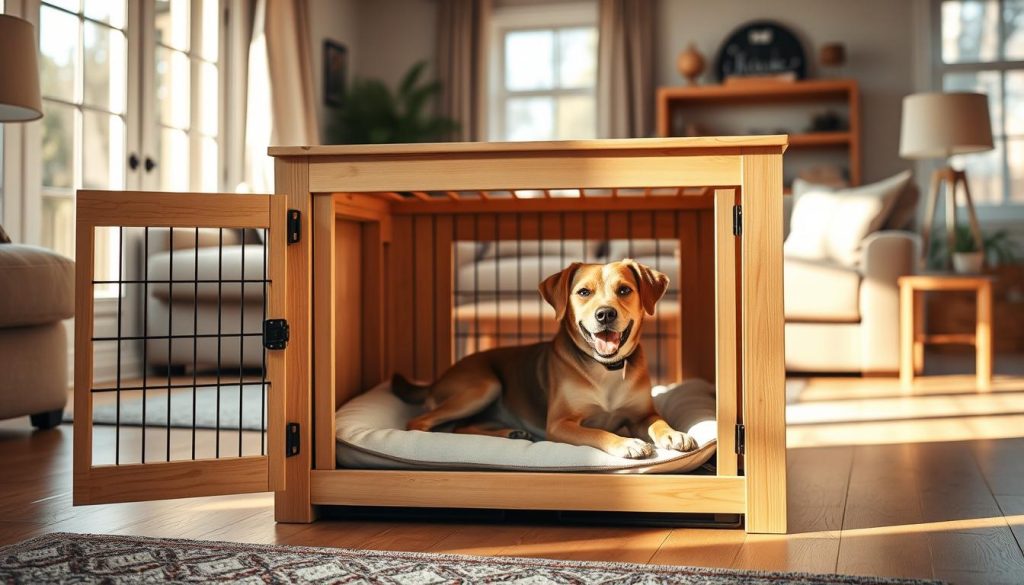
The crate helps ease travel stress and makes vet visits easier. By training your dog to be comfortable in a crate, you create a safe space for trips. This familiarity helps keep your dog calm in new places.
Moreover, crate training helps your dog become more independent and less anxious when you’re away. When your dog views the crate as their own space, it’s easier to leave them alone. This secure zone helps manage your dog’s behavior, making it simpler to address any issues.
In summary, crate training offers many benefits. It improves dog safety, helps manage behavior, and strengthens your bond with your pet. It’s a key part of raising a happy and well-adjusted dog.
Choosing the Right Crate for Your Dog
Choosing a dog crate is key to successful crate training. The right size is crucial. Your dog should be able to stand, turn, and lie down easily. A crate that’s too small or too big can be uncomfortable for your dog.

There are many crate types, each with its own benefits. Wire crates are strong and let in lots of air, perfect for dogs who like to see around them. Plastic crates are good for travel because they’re closed in. Soft crates are light and easy to carry, great for calm dogs.
Make sure the crate locks well and has no sharp edges. It should be a cozy, safe spot for your dog. The right crate makes training easier and keeps your dog happy and healthy.
Introducing Your Dog to the Crate
When it’s time to start crate training, be patient and positive. Place the crate in a safe, calm spot. Open the door and let your dog explore at their own speed.
Make the crate inviting by adding favorite toys and treats. This helps your dog see the crate as a fun place. Let them discover it on their own terms for a smoother start.
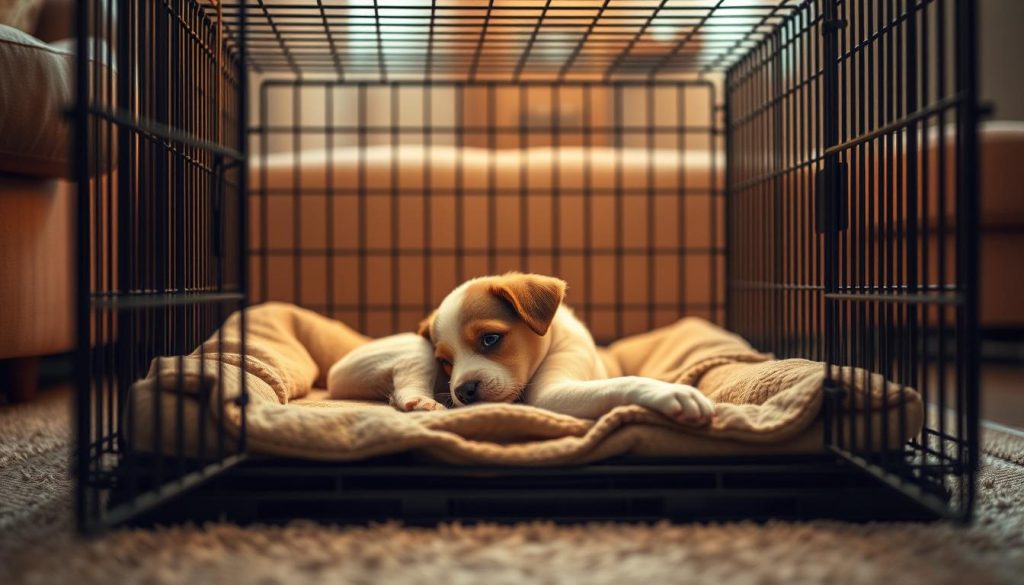
Encourage your dog with praise and treats for exploring the crate. Positive reinforcement makes them feel good about their new space. Stay patient and consistent for a stress-free introduction.
Creating a Routine for Crate Training
Creating a consistent crate training schedule is great for you and your dog. It aligns crate time with sleep, meals, and breaks. This makes a predictable daily routine that lowers anxiety.
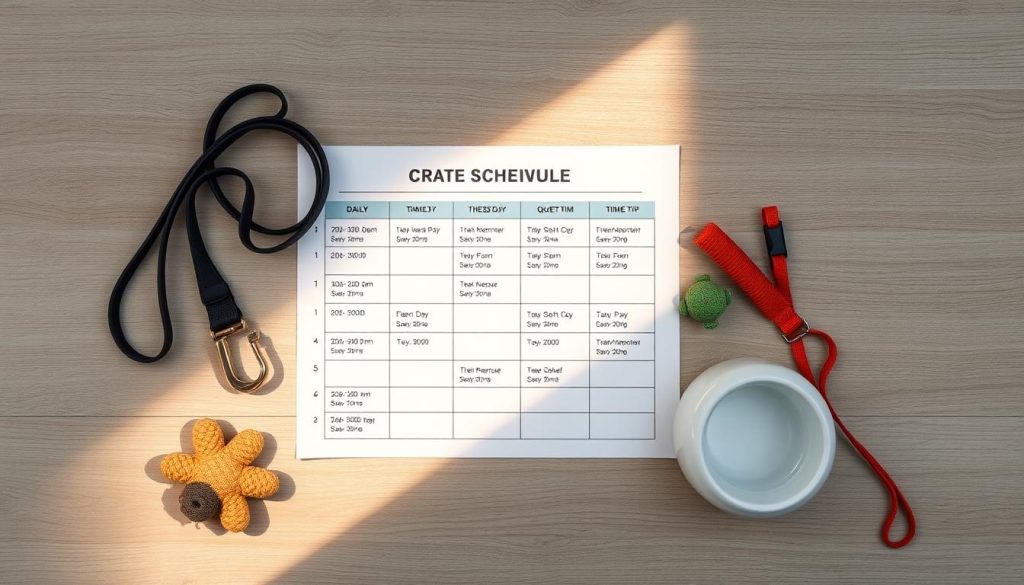
Being consistent in crate training is crucial. It helps your dog feel secure and builds trust. A clear schedule also makes bedtime and mealtime transitions easier.
Always follow your daily crate routine. This method boosts crate training success and improves your dog’s happiness. It ensures they feel safe and cozy in their crate.
The Best Way to Crate Train Your Dog Without Stress
Crate training can be rewarding for you and your dog if done right. Let’s look at some easy ways to crate train without stress. Start by introducing the crate slowly. Make it a safe space for your dog.
Begin with short times and slowly increase how long your dog stays in the crate. Don’t use the crate as punishment. This can make your dog feel bad and not want to go in. Instead, make the crate a place of positive experiences, like treats or toys.
Always respond to your dog’s needs quickly to avoid any distress. If your dog seems anxious, slow down the crate time until they feel okay again. Being patient and consistent is key to stress-free crate training.
Your dog should never feel left out or ignored when in the crate. Using a gentle approach to crate training makes it easier and more effective. Always stay calm and patient during the training.
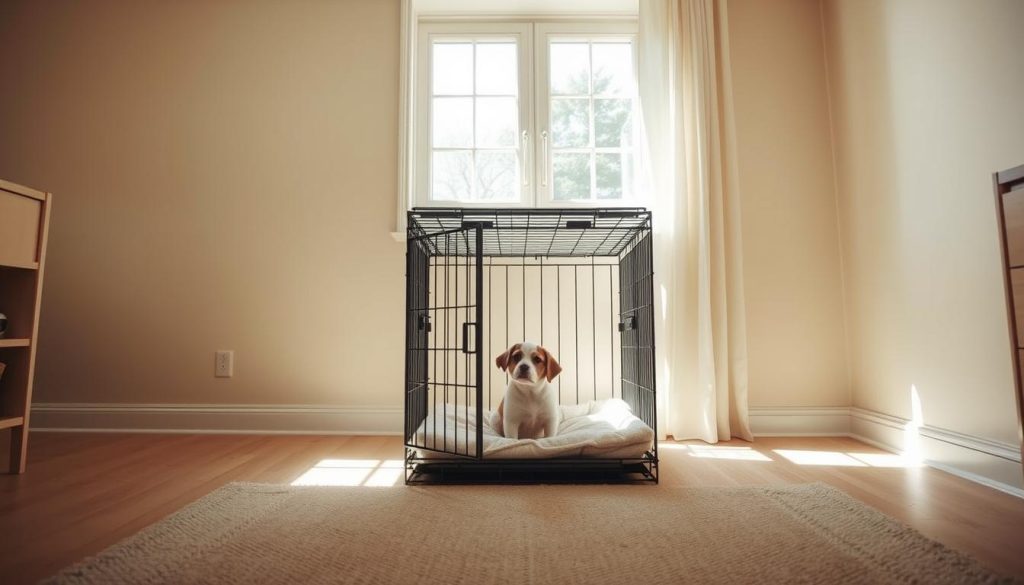
Using Positive Reinforcement Techniques
Crate training can be easy with positive reinforcement. Use treats, toys, and praise to encourage good behavior. This turns the crate into a safe space for your pet.
When your dog goes into the crate, reward them right away. This links the crate to positive experiences. It’s key for successful training.
Using dog training rewards boosts your dog’s confidence. It also strengthens your bond. Consistently rewarding good behavior shows your dog that cooperation is rewarded.
Choose rewards that your dog likes best. Some like treats, others toys or praise. Tailoring rewards to your dog’s preferences works best. Positive crate training makes your dog feel safe and happy.
Quick Recommendation: Our blog is filled with tips and tricks for training your puppy or dog. If you’re seeking a comprehensive training program, we recommend K9 Training Institute.
Managing Crate Time Positively
Effective crate training means finding the right balance. It’s important to set limits on crate time to avoid any discomfort. Think of the crate as a cozy retreat, not just a place to stay.
When managing crate time, consider your dog’s age, breed, and personality. Puppies need more breaks because of their small bladders and lots of energy. Make sure to reward them during crate time.
Exercise is key to a happy dog. A tired dog is a content dog. Regular walks, play, and social time help make the crate a positive space. This balance is good for your dog’s happiness and health.
Monitoring Your Dog’s Behavior
Understanding dog behavior is key when watching how your dog reacts to the crate. Their body language shows if they’re comfortable or stressed. Look for signs of calm, like lying down or sniffing, and signs of stress, like whining or trying to get out.
Watching how your dog reacts to the crate helps you adjust the training. If they seem stressed, shorten the crate time and give more positive feedback. This makes them feel safe and comfortable. Gradually increase the crate time while watching their behavior to understand them better.
Vocalizations like barking or whining also reveal a lot. Paying attention to these signs helps you adjust the training to fit your dog’s needs. Being patient and studying your dog’s behavior is crucial for successful crate training.
Crate Training Puppies vs. Adult Dogs
Knowing the difference between *puppy crate training* and *adult dog crate training* is crucial. Puppies need more frequent breaks because they’re still growing. Training sessions should be short to keep them focused.
For puppies, training should match their bladder’s capacity, usually a few hours. This helps them adjust better without getting too stressed.
On the other hand, *adult dog crate training* might need a different plan, especially if your dog has had bad experiences with crates. Be patient and consistent. Use positive reinforcement and slowly increase crate time as they become more comfortable.
Creating a safe and comforting space is key to overcoming past issues. This helps your dog feel secure and relaxed in the crate.
Whether you’re training a puppy or an adult dog, using age-specific methods is important. Adjust your training based on your dog’s needs and past experiences. This way, you can make crate training a positive experience for them.
Common Mistakes to Avoid
Crate training your dog can be easy if done right. But, common mistakes can make it hard. One big mistake is rushing the process. Don’t push your dog into the crate or expect it to adjust right away.
Another mistake is not making the crate a positive place. Make sure your dog’s crate is cozy with familiar items like blankets or toys. Give treats when your dog goes into the crate alone to build a good association.
One of the biggest mistakes is using the crate as punishment. Never send your dog to the crate as a punishment. This will make them see the crate as a bad place.
Instead, use the crate as a calm and safe space for your dog.
By avoiding these common mistakes, you can help your dog succeed in crate training. Learning these tips will make your home a happier place for both you and your dog.
Ensuring Long-Term Success
To keep crate training successful, keep up the good work. It’s not about stopping crate use suddenly. Instead, make the crate a part of your dog’s life forever.
Positive reinforcement is crucial. Give your dog treats and praise when they go into the crate. This makes crate time a happy experience.
As your dog gets older or younger, their needs change. Update the crate routine to fit these changes. Adding padding for older dogs or new toys for younger ones is important. This keeps crate training successful for years.
Troubleshooting Crate Training Issues
Crate training can sometimes be tough. A common problem is when a dog won’t go into the crate. To make it more appealing, put your dog’s favorite toys inside. Also, give treats when they go in on their own. Remember, being patient and consistent is important to avoid making your dog anxious.
Another issue is when your dog barks or whines a lot in the crate. Make sure they get enough exercise before being left alone. You can also cover the crate with a blanket that lets air through. This can make your dog feel more calm and cozy.
For dogs that can’t calm down, start by increasing crate time a little at a time. Always give positive feedback during this time. Begin with short periods while you’re home, then gradually make it longer. This teaches your dog that the crate is a safe and relaxing place.
If these problems keep happening, it’s a good idea to talk to a professional trainer or vet. They can give you specific advice based on your dog’s personality and needs.
Conclusion
Starting a dog crate training journey takes patience, consistency, and love. Choose the right crate and introduce it slowly. This helps your dog see it as a safe, cozy place. Every dog is different, so listen to their needs for a stress-free training.
Positive reinforcement is key to successful crate training. Reward your dog for good behavior and manage crate time well. Keep an eye on their actions to make changes when needed. This builds trust and makes your dog feel safe and happy.
Training a puppy or an adult dog requires avoiding common mistakes and being flexible. Crate training is a way to bond with your dog and improve their well-being. With patience and understanding, you and your dog will have a stress-free experience.
Quick Recommendation: Our blog is filled with tips and tricks for training your puppy or dog. If you’re seeking a comprehensive training program, we recommend K9 Training Institute.