
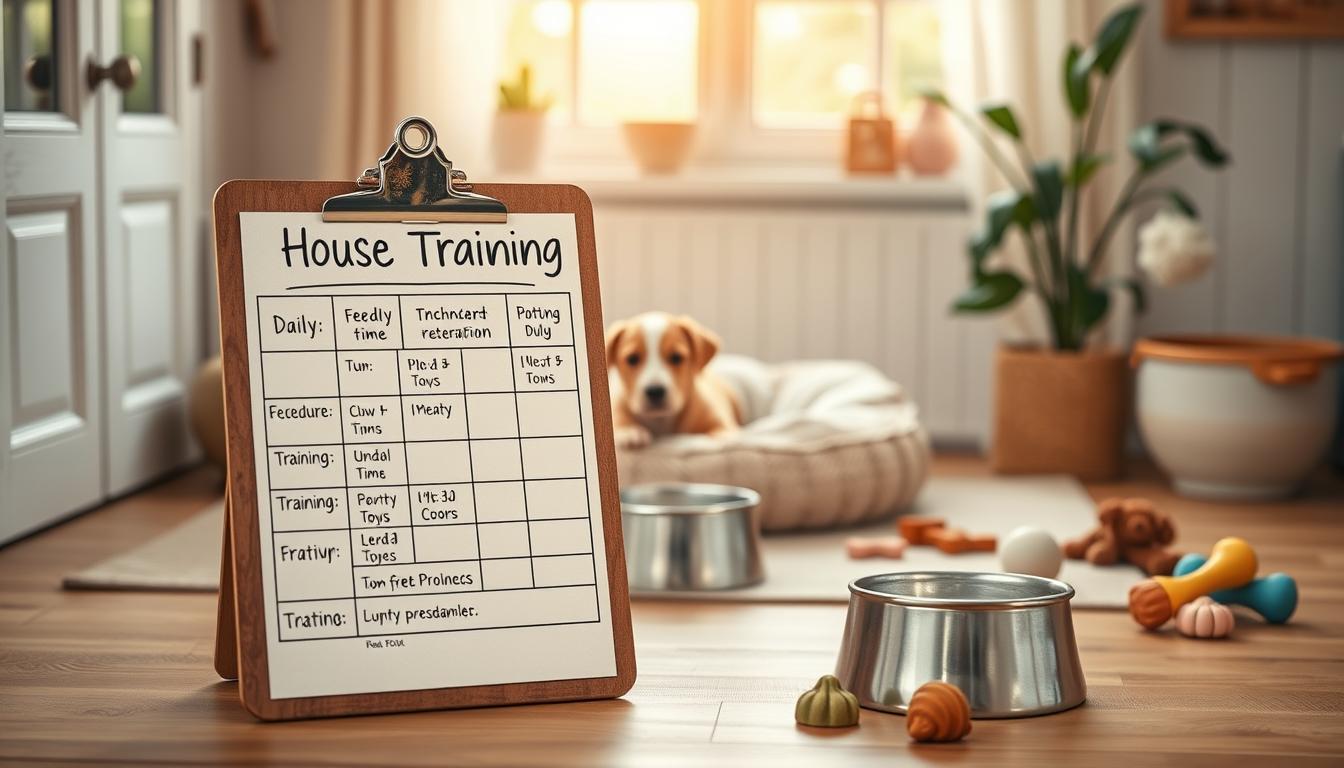
Ever wondered how some dog owners potty train their puppies so fast and easy?
Welcome to your ultimate guide on effective potty training strategies! If you want to know how to put your puppy on a consistent puppy house training schedule for quick results, you’re in the right spot. Training your pup isn’t just luck; it’s about patience, consistency, and a step-by-step plan. With the right methods, you can toilet train puppies quickly and well. Let’s explore the steps to make this journey easier for you and your furry friend!
Quick Recommendation: Our blog is filled with tips and tricks for training your puppy or dog. If you’re seeking a comprehensive training program, we recommend K9 Training Institute.
The Basics of Potty Training Your Puppy
Knowing the puppy potty training essentials is key for new owners. Understanding a puppy’s natural habits helps a lot. Puppies naturally try to keep their sleeping area clean, which you can use to your advantage.
Bladder control depends on the puppy’s age. Younger puppies need to go out more often than older ones. This knowledge is the first step in house training.
Creating a routine is crucial for potty training. It helps your puppy know when it’s time to go. You should take them out after meals, naps, and play. Starting this routine early helps your puppy learn faster and easier.
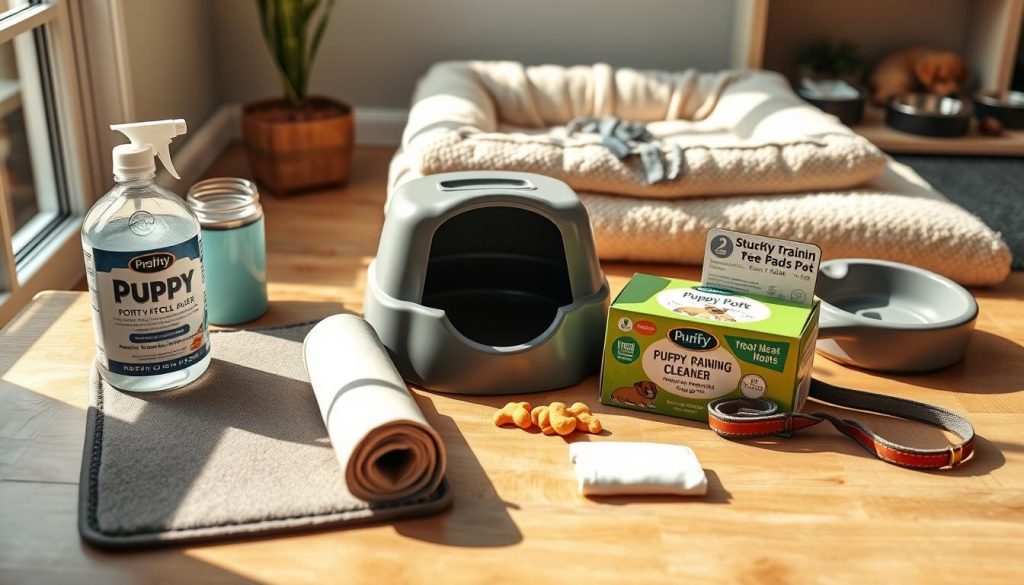
It’s best to start training early, between 8 to 12 weeks. This age is perfect for learning potty training. Experts say to be patient and use positive reinforcement. Every puppy learns at their own pace, but with the right training, they’ll get there.
Choosing the Right Potty Area
Choosing the right potty area for your puppy is important. Safety and easy access are key. Make sure the potty zones are secure and easy to get to.
Think about whether to use an outdoor or indoor potty area. Outdoor spots like backyards are natural but can be tough in bad weather. Indoor options like puppy pads or artificial grass are great for city living or when it’s cold outside.
Many people use indoor solutions and see great results. For example, Fresh Patch offers real grass that’s easy to care for. Vets say the right surface is crucial for your puppy’s comfort and training success.
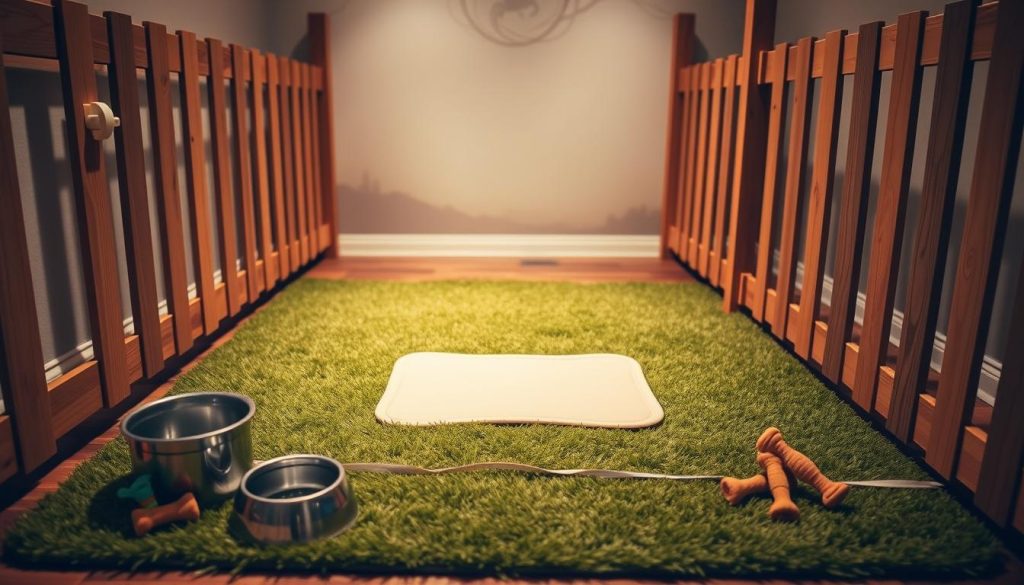
Understanding your puppy’s needs is the main thing. Whether you choose indoor or outdoor, being consistent helps your puppy learn fast. This makes training positive for both you and your puppy.
Consistent Feeding Routine
Creating a regular puppy feeding schedule is key to good potty training. Regular meals help you guess when your puppy needs to go. This makes it easier to link meal times with potty breaks.
Experts, like those from the American Kennel Club (AKC), recommend setting meal times that match your puppy’s digestive cycle. Choosing high-quality foods like Hill’s Science Diet or Blue Buffalo is important. It helps with both nutrition and house training, helping your puppy control their bowels better. Puppies usually need three to four meals a day, but this changes as they grow.
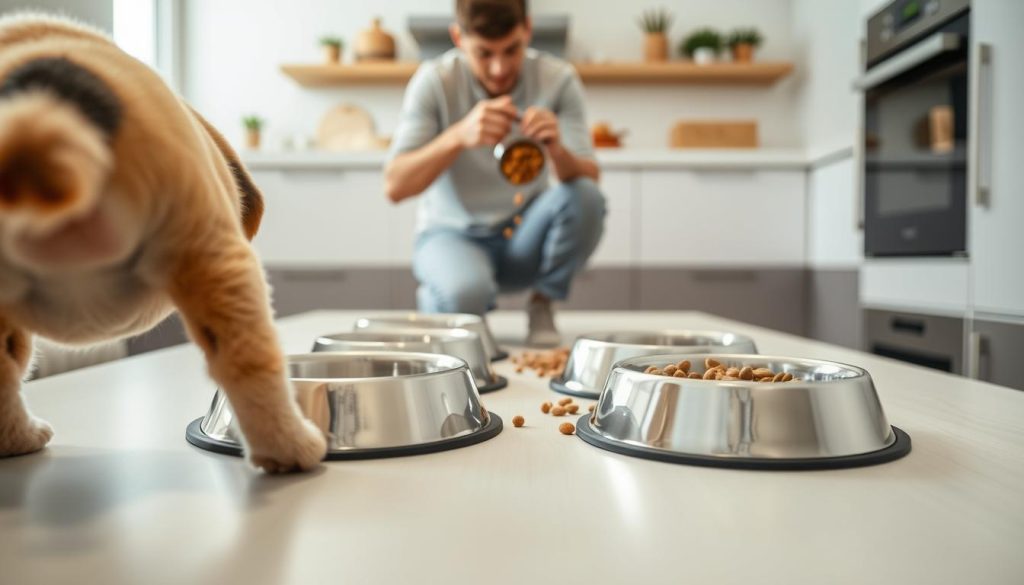
The link between what your puppy eats and their potty habits is clear. A balanced diet keeps your puppy healthy and regular. Talking to a pet nutritionist can help find the best food for your puppy. This makes house training easier.
Recognizing Potty Signals
Learning to read puppy potty cues is key for successful house training. By understanding puppy behavior, you can cut down on accidents and encourage good habits. Signs before peeing include circling, sniffing, whining, or scratching at the door. Paying attention to these signs helps you take your puppy outside on time.
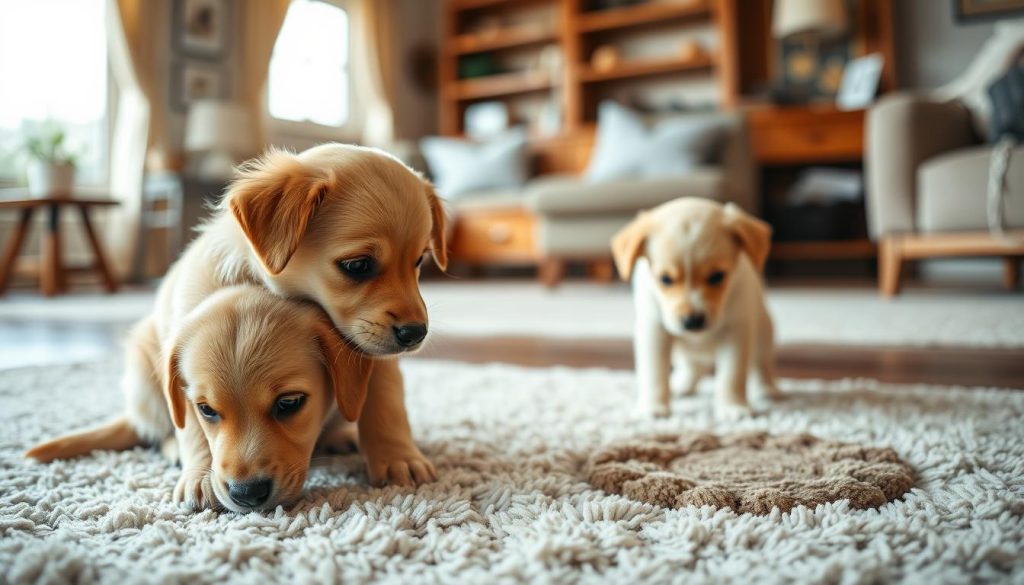
Experts like Cesar Millan and Victoria Stilwell stress the need to watch for these signs. They say puppies show clear patterns when they need to go. Circling and sniffing are common signs before they pee. If your puppy scratches at the door or whines, it’s a clear sign they need to go outside.
By being alert and recognizing these cues, you can make potty training better. Accurately reading puppy behavior means you can act fast, reducing accidents. Remember, being consistent and patient is crucial for your puppy’s learning.
Quick Recommendation: Our blog is filled with tips and tricks for training your puppy or dog. If you’re seeking a comprehensive training program, we recommend K9 Training Institute.
Using a Schedule to Potty Train Your Puppy
Creating a solid house training routine is key for success. By following potty break timings and setting up effective potty schedules, your puppy will learn when and where to go.
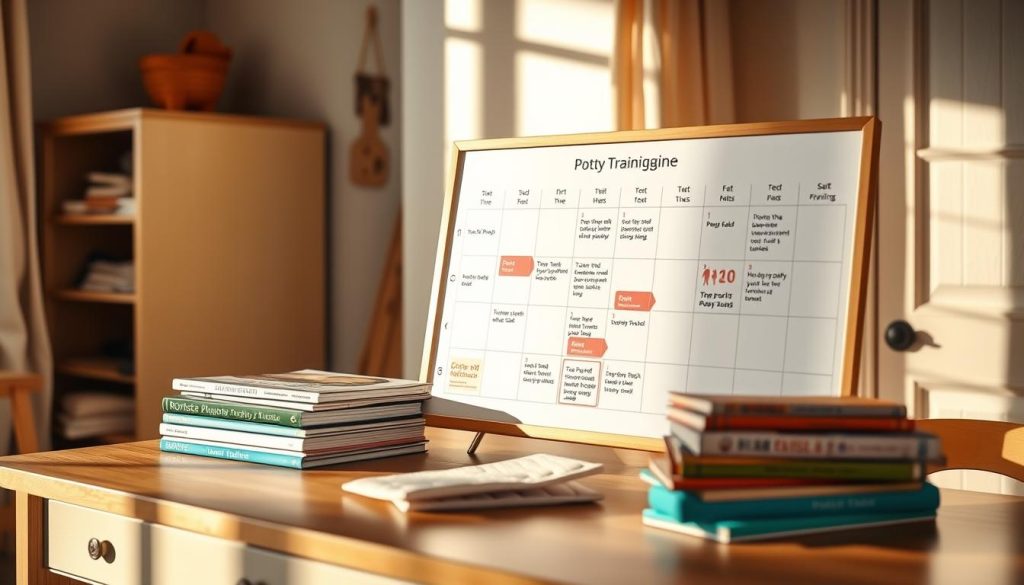
Experts, like the Humane Society, recommend taking your puppy out in the morning, after meals, naps, play, and before bed. This structured routine helps prevent accidents by giving your puppy many chances to go.
For young puppies, aim for potty breaks every one to two hours. As they grow, you can increase the time between breaks. It’s important to be consistent. Stick to your potty schedules, even on weekends, to strengthen the habits.
Being patient and consistent with potty breaks makes the process easier. Following these tips will make house training a positive experience for both you and your puppy.
Positive Reinforcement Techniques
Positive reinforcement is a great way to potty train your puppy. It makes your puppy link good behavior to fun rewards. When your puppy goes potty outside, give them treats, praise, or a pat.
Being supportive during potty training boosts your puppy’s confidence. Studies show positive reinforcement is top-notch for training dogs. Use treats your puppy loves, like those from Zuke’s or Pet Botanics.
Clickers can also help. They give a clear sign that your puppy did something right. This method speeds up training and strengthens your bond. Remember, positive reinforcement is about being consistent, patient, and loving every step of the way.
Crate Training Benefits
Using a crate is a top way to housebreak your puppy. Crates give your puppy a safe, cozy spot to relax. Experts say crate training makes housebreaking easier.
Choose a crate that fits your puppy well. Brands like Midwest Life Stages and Petmate Ultra Vari Kennel have many sizes. The crate should let your puppy stand, turn, and lie down easily, but not too big.
Crate training does more than just help with potty training. It also helps manage your puppy’s behavior. Vets say dogs naturally keep their sleeping areas clean, making crates great for potty training.
Start crate training by making it a positive experience. Introduce your puppy to the crate slowly, with their favorite toys and treats inside. Short, supervised times help them get used to longer crate stays.
Housebreaking with a crate has many benefits. It gives your puppy a structured space and peace of mind for you. By following these tips and picking the right crate, you can make potty training easier.
Handling Accidents Properly
Accidents are a normal part of potty training your puppy. Stay calm when it happens and clean it up fast. This keeps your home smelling fresh and clean.
Start by using products like Nature’s Miracle or Rocco & Roxie Stain and Odor Eliminator. They’re made for removing urine smells. Cleaning pros say they work well because they get rid of stains and smells, so your puppy won’t go back there.
When dealing with potty training setbacks, clean the area well to get rid of smells. Dogs go back to places they’ve peed because of the smell. Use a paper towel to soak up any extra liquid, then apply the cleaning solution.
Being consistent is important in potty training. Clean up accidents right away to keep your home smelling good and your training on track. Using the right cleaning methods will help you and your puppy get past these small problems easily.
Common Mistakes to Avoid
Starting your puppy’s training can be tricky. Knowing common potty training pitfalls is key. A big mistake is not sticking to a routine. Puppies love routine, so keep their feeding and potty times the same every day. If you don’t, they might have accidents inside.
Another mistake is missing your puppy’s potty signals. Signs like sniffing or circling mean they need to go. If you ignore these, training will take longer and accidents will happen more often. It’s important to respond quickly and correctly to these signals.
Using harsh punishment is another big mistake. It can make your puppy scared and anxious, making training harder. Instead, use positive reinforcement. Give treats and praise when they go potty outside correctly.
Knowing these mistakes and using the right training advice can help a lot. By avoiding common errors and focusing on consistency and positive reinforcement, you’ll have a well-trained and happy puppy.
Utilizing Training Aids
Effective potty training often involves using various tools. These tools can greatly speed up the house training process. Products like potty bells and specialized training sprays are beneficial for puppy training.
PoochieBells is a popular choice among pet owners. It teaches your puppy to signal when they need to go outside. Hang the bells on your door and encourage your puppy to ring them when they need to go.
Over time, they will learn to use the bells to indicate their need to relieve themselves.
The Bodhi Dog Potty Training Spray is also widely recommended. It attracts puppies to specific spots, encouraging them to do their business there. Professional trainers suggest spraying it on pee pads or designated potty areas for a consistent solution.
For tech-savvy pet owners, there are puppy training apps available. These apps remind you of potty breaks, track your puppy’s progress, and offer tips on house training. Apps like Pupy and Pupster are known for their easy-to-use interfaces.
Incorporating these tools into your routine can make house training smoother. With the right tools and consistent training, your puppy will learn faster and more efficiently.
Conclusion
Summarizing puppy toilet training, it’s clear that systematic and patient efforts can yield fantastic results. Understanding the basics, picking the right potty area, and keeping a consistent feeding routine are all key. Recognizing your puppy’s potty signals and sticking to a schedule are also important.
Using positive reinforcement and crate training can help a lot. Handling accidents carefully and avoiding common mistakes also helps. Training aids can support and enhance your efforts.
Remember, patience and consistency are crucial for quick potty training. This journey, though sometimes tough, leads to a well-behaved companion. Don’t be afraid to ask for help from local dog training clubs or online communities. Your hard work will pay off, leading to a successful house training experience.
Quick Recommendation: Our blog is filled with tips and tricks for training your puppy or dog. If you’re seeking a comprehensive training program, we recommend K9 Training Institute.