
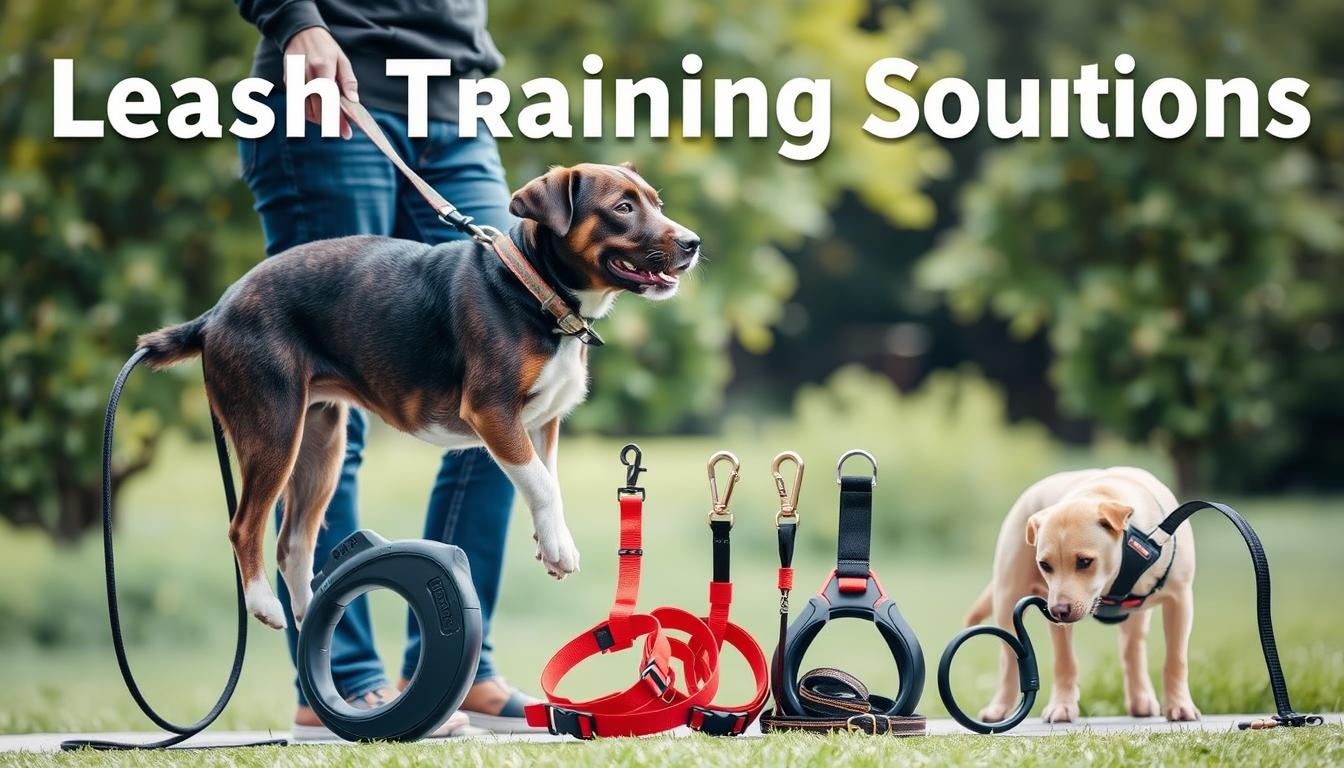
Ever wondered why your dog pulls on the leash? It turns walks into a tug-of-war. Mastering leash training is key for a good relationship with your dog. We’ll share solutions to teach your dog to walk nicely by your side.
Imagine stress-free strolls with a well-behaved pet. We’ll show you practical tips and techniques to make walks better.
Quick Recommendation: Our blog is filled with tips and tricks for training your puppy or dog. If you’re seeking a comprehensive training program, we recommend K9 Training Institute.
Understanding Why Dogs Pull on the Leash
Dogs often pull on the leash because they are curious and excited. They love to sniff and see everything on their walk. This makes them pull on the leash.
Not getting enough exercise is another reason. Dogs have lots of energy. If they don’t get to run around, they pull on the leash.
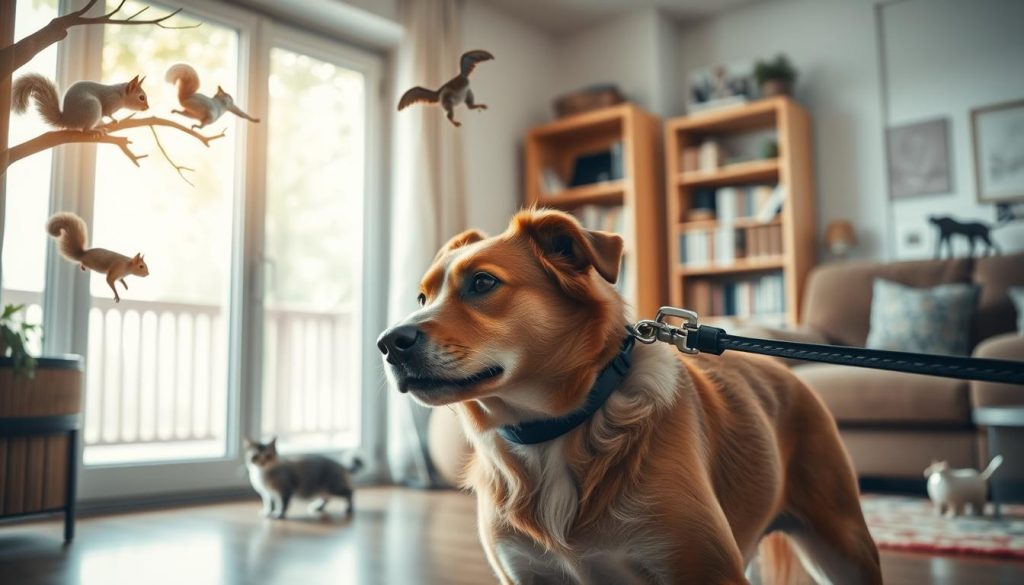
Learning to pull can also be a problem. If pulling gets them where they want to go faster, they keep doing it. Every dog is different, so you need a plan that works just for them.
Knowing why your dog pulls helps you train them better. You can use this knowledge to make walks better for both you and your dog. This way, you can enjoy walks more and make your dog happier.
Importance of Leash Training for Your Dog
Leash training is more than just a nice walk with your dog. It’s key to being a responsible pet owner. It keeps your dog safe from dangers like cars and wild animals.
Leash training has many benefits. A trained dog is safer for everyone. It also follows local laws, protecting your pet and the community.
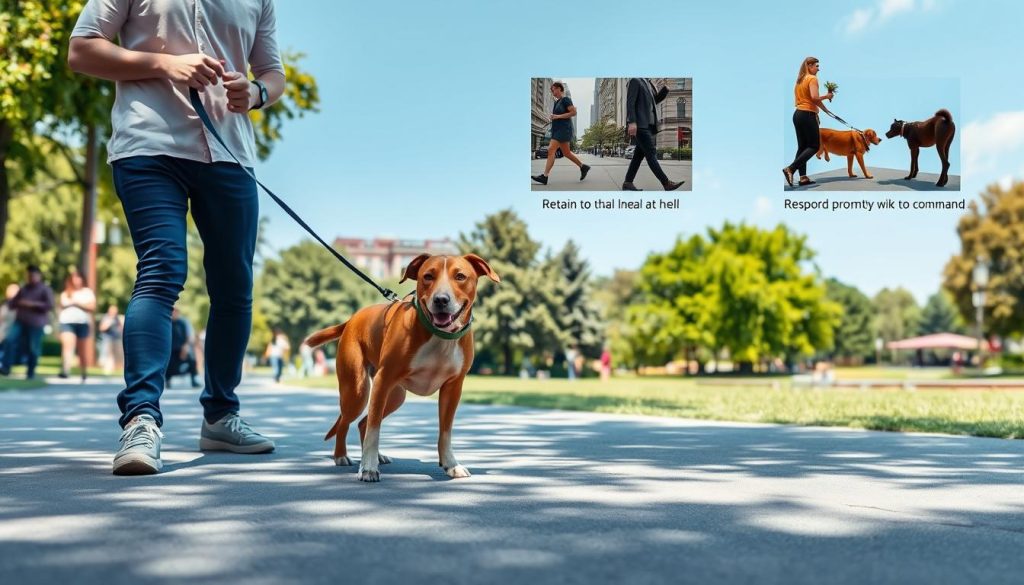
Leash training also strengthens your bond with your dog. Walking together calmly builds trust and better communication. This makes your walks more fun and stress-free.
How to Choose the Right Leash and Collar
Choosing the right leash starts with knowing your dog’s size and breed. Larger dogs need stronger, more durable leashes. Smaller dogs can do well with lighter, more flexible ones. Nylon leashes are tough and affordable, while leather leashes are stylish and last long.
The design of the leash is also key. Retractable leashes give dogs more freedom but can make training hard. Standard flat leashes, however, offer better control, which is key for training.
When picking a dog collar, it’s important to know the types available. A traditional flat collar is good for daily use and comes in nylon and leather. For dogs that pull a lot, a martingale collar is better. It tightens a bit when the dog pulls, without choking.
Harnesses are another option. They can be more comfortable for some dogs and prevent neck injuries. They’re especially good for breeds with breathing problems. But, different harness designs can affect your control during training. Front-clip harnesses are best for training, as they guide the dog better and reduce pulling.
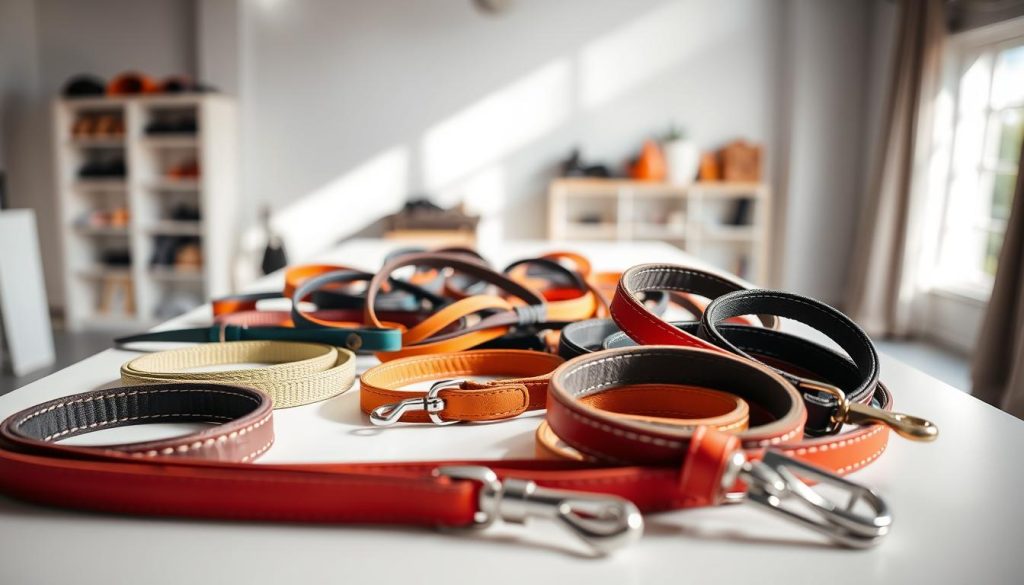
Choosing the right training equipment is crucial for success. The right leash and collar make walks comfortable and safe for both you and your dog. By carefully selecting, you’re setting up for a successful and enjoyable training journey.
Preparing for Leash Training
Before starting leash training, get ready mentally and set up a good learning space. Know your dog’s learning style. Every dog is unique, so find the best way to teach them.
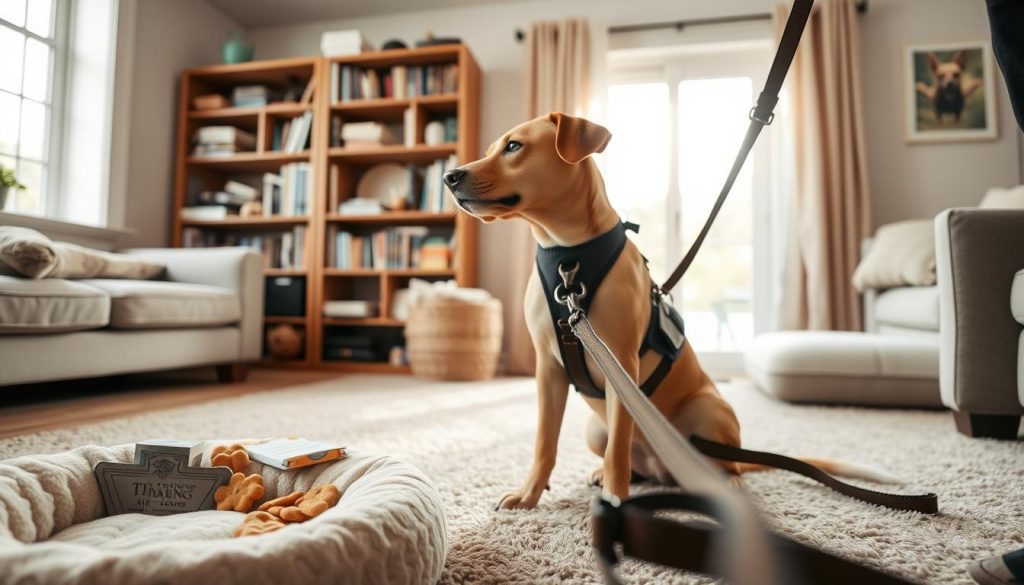
Make sure your dog is calm and ready to learn. If they’re too excited or stressed, they won’t learn well. Choose a quiet, safe spot without distractions.
Use treats, toys, and a positive mindset. These help your dog learn good habits and stay interested. Remember, leash training takes time and effort. With the right preparation and routine, you and your dog will have a great experience.
Quick Recommendation: Our blog is filled with tips and tricks for training your puppy or dog. If you’re seeking a comprehensive training program, we recommend K9 Training Institute.
Starting Leash Training: First Steps
Starting leash training with your dog can be very rewarding. Begin by letting them get used to the leash and collar indoors. Make sure it’s a quiet place with no distractions.
Make wearing the leash a positive experience. Give treats and praise when they wear it calmly. Teach them to stay close without pulling. Start with simple commands like “sit” and “stay.”
Take it slow to avoid frustration. Begin with short walks and gradually increase the time. The goal is to make training fun for both you and your dog.
Your first walk should be brief and patient. Hold the leash comfortably and keep your dog on your left. Reward them with treats for walking by your side without pulling. Consistency is crucial for success.
These early steps are important for future success. Stay calm, be patient, and enjoy the time with your dog!
Using Positive Reinforcement Techniques
Positive training methods are key to success in dog leash training. By rewarding good behavior, you motivate your dog to follow commands and walk nicely. Treats, praise, or play are essential tools in your training.
Start with small steps and be consistent. Reward your dog immediately when they show good behavior, like staying by your side. This reinforces the behavior you want to see more.
Verbal praise, like saying “Good boy” or “Good girl,” with treats works well. Using play as a reward is also effective. A favorite toy or a fun game can strengthen your bond and make training fun.
These positive methods can lead to great training success. Your dog will learn that walking nicely on the leash has positive outcomes. This makes the experience more enjoyable for both of you. Remember these strategies for better leash behavior.
Leash Training 101: How to Stop Pulling and Walk Nicely
To prevent leash pulling and master the art of walking your dog nicely, consistency is key. Start by ensuring you have the right equipment. A standard leash and a well-fitted collar provide better control and safety for your dog.
Begin with short sessions in a distraction-free environment. Use effective walking commands like “heel” and “let’s go” to set clear expectations. It’s crucial to reward your dog immediately when they comply. Treats or praise serve as great motivators.
If your dog begins to pull, stop walking immediately. Wait until they return to your side before resuming. This teaches them that pulling won’t get them anywhere quickly. This method is integral in mastering leash training.
Practice makes perfect—be patient and remain consistent. Over time, your dog will understand that walking by your side leads to positive outcomes and enjoyable walks.
Dealing with Common Leash Training Challenges
Leash training can be tough, even for experienced dog owners. One big challenge is when your dog gets distracted. This could be by other dogs, people, or even squirrels. Handling these distractions well takes patience and practice.
Understanding what triggers your dog is key to managing their behavior. Begin by exposing them to small distractions and reward them for staying calm. As they get used to it, you can increase the distractions. Always be consistent.
Another challenge is dealing with stubborn dogs. Some dogs are harder to train than others. To overcome this, mix positive rewards with gentle corrections. If your dog still pulls, getting help from a professional trainer might be a good idea.
Training adult dogs who pull can be tough. But, stay patient and keep trying. Use tools like no-pull harnesses and start leash training again in a controlled setting. Positive rewards are essential in changing their behavior.
Knowing your dog’s personality and temperament helps a lot. Some dogs do better with certain training methods. Take time to learn what works best for your dog. With the right approach, you can overcome leash training obstacles and have a well-behaved dog.
Advanced Leash Training Tips
Once your dog knows basic leash skills, it’s time for advanced techniques. These aim to make you a better dog walker and improve your dog’s leash skills.
Start with heel training. This makes walking in busy places easier. Begin in a quiet spot with few distractions. Hold a treat at your waist and say “heel” while walking. Reward your dog often for staying by your side.
As your dog gets better, add more distractions and walk longer.
Off-leash training is another advanced method. Practice in safe, enclosed areas to boost your dog’s obedience. First, make sure your dog comes back when called. Use a long, light leash before going off-leash.
Don’t forget to stop using treats as rewards. Start by giving treats often, then reduce them as your dog learns. Use praise and affection instead of treats.
These advanced techniques will greatly improve your dog’s leash skills. They’ll become a well-behaved walking buddy. Always be patient and consistent for the best results.
Maintaining Good Leash Behavior Over Time
Consistency is key to keeping training results. Making leash manners a part of daily walks teaches your dog it’s not just for now. Every walk is a chance to keep training your dog.
Keep using positive reinforcement to keep leash manners going. Give treats or praise when your dog walks well. This keeps them wanting to behave.
Don’t forget to refresh training sometimes. Even well-trained dogs need a reminder. A quick review of leash basics can make a big difference.
By making these habits part of your routine, walks will be enjoyable for both you and your dog. Remember, keeping up with training and positive reinforcement is crucial for good leash behavior.
Conclusion
Remember, patience and consistency are key in leash training. Every dog learns at their own pace. So, it’s important to understand and meet your dog’s unique needs.
Leash training is more than just stopping pulling. It’s about building a stronger bond with your dog. As you start training, choose the right tools like the leash and collar.
Begin with short, simple sessions. Use positive reinforcement to encourage good behavior. This makes walks enjoyable for both you and your dog.
Dealing with challenges is part of the journey. Stay positive and consistent, even with distractions or pulling. Advanced tips and ongoing practice can solidify good habits.
Our final thoughts are that successful leash training improves your walks and your dog’s life. Stay committed and enjoy those pleasant walks!
Quick Recommendation: Our blog is filled with tips and tricks for training your puppy or dog. If you’re seeking a comprehensive training program, we recommend K9 Training Institute.