

Imagine you’re at the park with your dog, and while you’re tying your shoe, a squirrel catches their eye. They dash towards the street, and you feel a rush of panic. But then, you call out “Stay” and your dog stops right away. This moment shows the importance of dog obedience training, especially the stay command.
Teaching your dog to stay is more than just showing off their discipline. It’s crucial for their safety and your bond with them. The American Kennel Club (AKC) says basic commands like “Stay” are key for a well-behaved dog. We’ll share step-by-step tips from experts, stressing the need for patience and consistency.
We’ll also look at success stories from dog owners who used positive reinforcement. Are you ready to start this journey? Let’s find the best ways to teach your dog to stay, making your time together safer and more enjoyable.
Quick Recommendation: Our blog is filled with tips and tricks for training your puppy or dog. If you’re seeking a comprehensive training program, we recommend K9 Training Institute.
Why Teaching Your Dog to Stay Is Important
Teaching your dog to stay is key to being a responsible pet owner. This command helps keep your dog safe and creates a structured home. Imagine being in a busy park; a stay command can stop your dog from running into danger.
Vets say this command is vital for good dog behavior. It also makes life easier for pet owners. Dr. Sarah Wooten points out that a dog who knows the stay command is less likely to get into trouble.

Many accidents have been avoided thanks to training. Dogs that know the stay command are much safer. This is a big win for pet owners.
Many pet owners share stories of how the stay command saved the day. It shows how important this command is in real life. Teaching your dog to stay makes life safer and more peaceful for both of you.
Understanding Your Dog’s Behavior
Understanding dog psychology and body language is key for good training. Knowing your dog’s cues helps you respond well and keep training positive. Dogs show different signs during training that tell you how they feel and what they understand.

Look for signs like tail wagging, ear positions, and body posture. A relaxed dog has a loose body and a wagging tail, showing they’re ready to learn. But, a tense posture and tucked tail mean they might be stressed or confused.
It’s important to read these signs right. A study by Emory University showed dogs process commands uniquely. So, adjusting training based on how your dog responds is crucial. Watching your dog’s body language during training gives you insight into their understanding.
Expert trainers, like those from the American Kennel Club, stress the need to read your dog’s body language. They say it helps you change training methods for better results. By paying attention to your dog’s signals, you can make training better and strengthen your bond.
Choosing the Right Time and Place for Training
Creating an optimal training environment is key for teaching your dog the stay command. The right setting and timing greatly affect your dog’s focus and learning. Choose a distraction-free setting for your dog to concentrate without interruptions. This could be a quiet room in your home or a secluded spot in your yard.
Studies show dogs learn better in secure, quiet places. By reducing distractions, your dog can focus on you and the task. This makes learning easier.
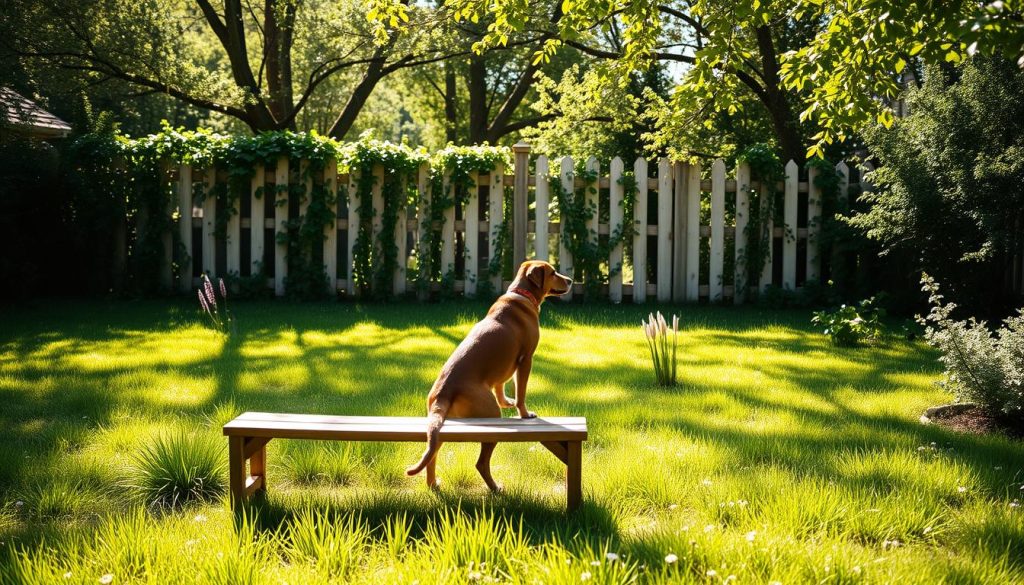
Also, having a consistent training schedule is vital. Dogs love routine, so train at the same time each day. Choose a calm time when your dog is not too energetic. Morning or evening works well for keeping their attention.
Trainers suggest short, frequent training sessions. Sessions of 10-15 minutes keep your dog interested without feeling overwhelmed. By following these tips, you create a great environment for learning and consistency.
Positive Reinforcement Techniques
Positive reinforcement is a key method in dog training. It rewards your dog for good behavior. This approach boosts their motivation to learn and follow commands.
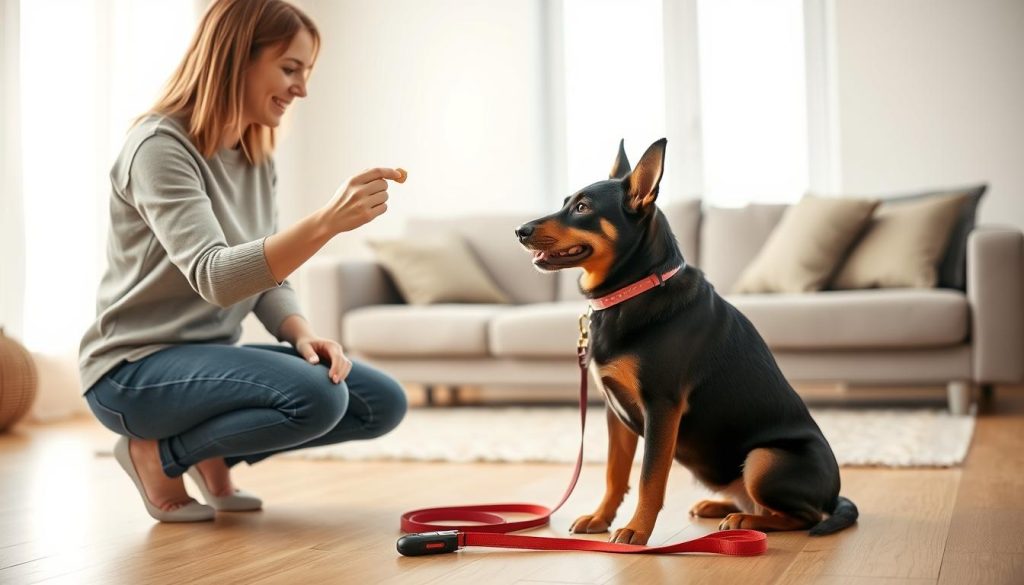
There are many rewards you can use, like treats, praise, and playtime. Treats are popular but should be given carefully to prevent overfeeding. Praise helps strengthen your bond, while play makes learning fun.
For the stay command, reward your dog right after they stay. Increase the time before rewarding to teach them staying is good. This method needs patience and consistency to work well.
Using positive reinforcement in training does more than teach good behavior. It also deepens your bond with your dog. By making training rewarding, you ensure your dog is happy and well-behaved.
Step-by-Step Guide to Training Your Dog to Stay
Training your dog to stay can be rewarding. Follow this guide to master the command with your furry friend.
First, pick a quiet spot without distractions. Tell your dog to sit. Then, take a step back. If they stay, give them a treat and praise.
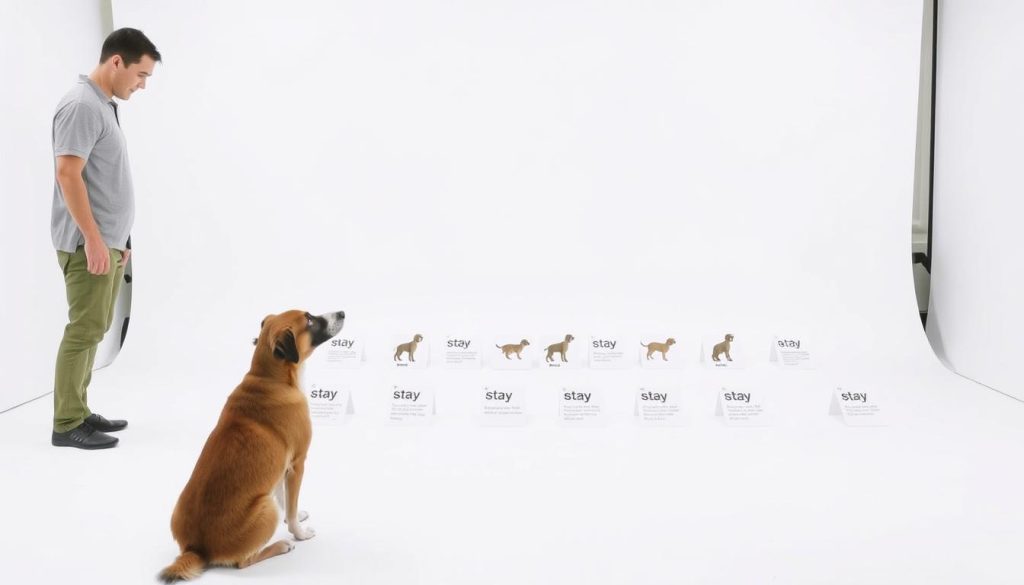
Next, increase the distance and time you’re away. Always go back to your dog with a release word like “okay” or “free.” This sets their stay boundary.
Be patient and repeat the training. If your dog breaks the stay, calmly put them back and try again. They’ll learn to stay for positive reasons.
Watch videos from professional trainers to improve your skills. These videos can help you understand the training better. If you face problems, get advice from certified dog training manuals.
Every dog learns differently. Celebrate small wins and keep training fun. This keeps your dog excited and eager to learn.
Quick Recommendation: Our blog is filled with tips and tricks for training your puppy or dog. If you’re seeking a comprehensive training program, we recommend K9 Training Institute.
Common Mistakes to Avoid
Training your dog to stay can be tricky. Many pet owners face common mistakes. Knowing these and how to correct them can help your dog learn the stay command better.
One big mistake is being inconsistent. Sometimes, you might forget to reward your dog for staying. Or, you might let them break the stay too soon. Being consistent is key because it helps your dog know what to do every time.
Another mistake is rushing through the training. If you move too fast, your dog might get confused. Dogs learn at their own pace, so be patient.
Using the wrong tone or body language can also confuse your dog. Dogs pick up on your cues. Make sure your voice is calm but firm, and your body language is clear.
Not training in different environments is another mistake. Training in a quiet place is different from a noisy one. Gradually adding distractions can help your dog learn in various settings.
If your dog breaks the stay, calmly take them back to the start. Try again. Being patient and rewarding them when they do stay will help them learn.
It’s also important to see things from your dog’s point of view. Sometimes, they might not want to stay because they’re anxious or uncomfortable. Watching their behavior and making changes can help them learn better.
Looking at case studies and following advice from experts like Cesar Millan can help. Sources like the American Kennel Club also offer valuable insights. They can help you avoid common mistakes and make training smoother.
Using Tools and Props
Using the right training aids can really help your dog learn the stay command. Tools like training clickers and special mats are key in teaching good behavior. It’s important to pick the right dog training equipment based on your dog’s needs and personality.
Training clickers make a clear sound that marks when your dog does something right. This helps you and your pet communicate better. Mats are places where your dog should stay, giving a visual clue along with your voice.
While effective training accessories are helpful, don’t just rely on them. Building a strong bond and understanding with your dog is the main goal. Choose and use training aids wisely to support your training, not take over.
The Role of Age and Breed in Training
Understanding age and breed is key in dog training. Each life stage brings its own challenges and chances to teach. Puppies, for example, need commands that fit their growing minds and abilities.
Adult dogs need a different strategy. They might focus better, but they also have habits to change. This is where adaptability in training is vital.
Senior dogs can learn too. They might not move as fast, but the right training keeps them happy and healthy. Gentle and slow training is best for them.
Breed-specific training is also important. Different breeds have unique traits and skills. For instance, smart breeds like Border Collies learn commands quickly.
Using these methods leads to better training for all dogs. It helps them behave well and adapt to new situations. By focusing on breed and age, you’ll get a well-trained dog.
Maintaining Consistency Outside of Training Sessions
Teaching your dog to behave well doesn’t stop after training sessions. It’s important to use what you’ve learned every day. This way, your dog learns to follow commands all the time, not just when you’re practicing.
Experts say it’s key to use the same commands and gestures every time. This helps your dog understand what you mean, no matter what’s happening. By doing this, your dog becomes more obedient and well-behaved.
Dogs also need constant reminders to follow commands. This means practicing “stay” not just during training, but all day long. For example, ask your dog to stay while you cook, watch TV, or have guests over. This makes the command a part of their daily life, not just a special training trick.
But remember, too much training can be bad for your dog. Make sure to give them breaks and playtime too. By mixing training into your daily routine, using consistent commands, and reinforcing them often, you can help your dog learn without getting stressed or bored.
Incorporating Stay Commands into Daily Activities
Adding stay commands to your dog’s daily life can really help with training. Try asking your dog to stay while you make their meal. This boosts their patience and shows them it’s important to wait until you say it’s okay.
When you’re about to leave, have your dog stay by the door. This helps you get ready while they learn to wait. You can also practice this during family dinners. Have your dog stay in their spot while everyone eats.
Social events, like going to the park or meeting neighbors, are great for training. Ask your dog to stay while they meet new people. This helps them learn to stay calm in different situations.
Experts say that doing these exercises every day helps your dog remember them better. These small moments of training each day add up. Using daily activities to teach your dog the stay command will help them learn it well.
Advanced Training Tips
Take your dog’s training to the next level with professional techniques. Focus on mastering complex commands. These tips will help you elevate your dog’s obedience, making them a well-behaved friend.
Start by looking into advanced training programs. These programs help you and your dog improve, adding new behaviors and tricks to their repertoire. Studies show that successful programs use a variety of techniques for lasting obedience and skills.
Talking to top dog trainers can give you great advice. They stress the need for consistent practice and gradual learning. For instance, you can teach your dog to stay while you do things far away. This is a key part of advanced training.
Finally, having a plan is key to moving up in dog training. Begin by strengthening basic commands before moving on to harder tasks. This keeps your dog interested and motivated. By doing this, you’ll see great results in your dog’s training.
Conclusion
You’ve learned how patience, consistency, and understanding are key to a well-behaved dog. You’ve seen why the “stay” command is important. You’ve also found out the best times and places to train.
We’ve talked about positive ways to train your dog. This keeps them motivated and eager to learn. The guide showed you how to avoid common mistakes. Using the right tools and considering your dog’s age and breed are important.
Experts have given you advanced tips and advice. Their words of encouragement remind you that your hard work is paying off. Success stories from other dog owners show that the journey is worth it.
Every step you take brings you closer to a well-trained dog. This journey not only trains your dog but also strengthens your bond. Enjoy the journey and celebrate your progress. Training your dog leads to a happy, well-behaved pet that brings joy to your life.
Quick Recommendation: Our blog is filled with tips and tricks for training your puppy or dog. If you’re seeking a comprehensive training program, we recommend K9 Training Institute.